


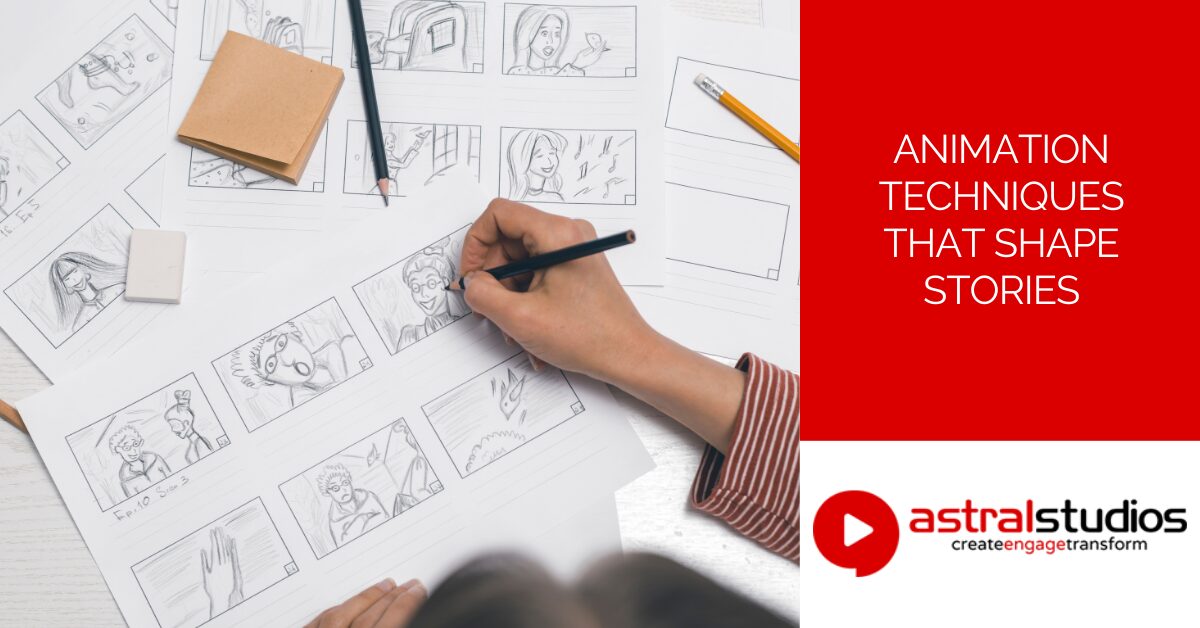
Animation Techniques That Shape Stories
Last Updated: 6 months ago by Astral Studios Staff
Animation techniques like 2D, 3D, and Stop Motion each offer unique ways to bring stories and ideas to life, captivating audiences with movement and creativity.
Mastering Animation Techniques for Effective Storytelling
When most people think about animation, it brings to mind cartoons, special effects, and colourful characters. Animation is more than an entertainment device-it is a means to tell arresting, unforgettable stories. Knowing different techniques is going to be the real key to making it work for your brand or project, each technique bringing with it its own unique power. Let’s dive in and see some of those techniques and how they change your storytelling.
.
2D Animation: Simplicity Meets Impact
This classic approach has been the backbone of several iconic movies, from The Lion King to SpongeBob SquarePants. The beauty of 2D animation lies in its simplicity. It reduces complex concepts to simple visuals that anyone can understand. Whether for marketing materials or digital content, 2D animation is what helps you get your message across clearly and effectively.
The versatility in 2D animation emanates from its potential capacity to take any idea, no matter how abstract, and give it life by way of connecting back with your audience in such a deep manner. This is a good starting point for anybody who wants to make an impression without burdening the viewer.
3D Animation: Crafting Realistic Worlds
3D animation is employed if a project requires an immersive undertaking. Think of movies like Toy Story and the astonishing visuals of Avatar. 3D animation entails the setting of characters, objects, and even whole worlds in appearance. The intention is not to remain flat like 2D but to achieve depth, texture, and lighting that will make your audience feel like they are stepping into another world.
While it entails a great deal of time and resources, the payoffs of 3D animation are huge. It wraps up your message in a visually stunning package that will be remembered long afterward by anyone who sees it.
Stop Motion: Bringing Art to Life
Stop motion animation is really an older technology, but very far from being obsolete. This is a frame-by-frame photography of objects to create an illusion of motion. Think of movies like The Nightmare Before Christmas or Wallace & Gromit. There’s something peculiar to the tactility of stop motion which gives this magic to animation. Every movement seems to have meaning and was well thought out, and therefore conveys the emotions to the audience.
Though time-consuming, stop motion is a technique that brings out creativity and authenticity. It’s ideal for projects where you want to present something unique, something that feels handmade and real.
Cutout Animation: Keeping It Simple
Cutout animation may seem basic at first glance, but it’s far more effective than many give it credit for. It utilizes flat characters and objects, usually cut from paper, and moves them frame by frame to tell the story. Shows like South Park started on cutout animation; it was quick, cheap, and gave the creators the flexibility needed.
This simplicity actually works to its favor. Cutout animation can often feel raw and genuine; the story can shine through without flashy distractions. It’s a technique that can be applied to everything from comedic skits down to more serious narratives, always bringing freshness and an unpolished feeling to the content.
Rotoscoping: Blending Real and Imagined Worlds
Rotoscoping involves drawing over live-action images in order to achieve animated characters and effects. It is a process of combining the real world and animation together, creating an uncanny and usually dreamlike quality. Films like A Scanner Darkly and parts of The Lord of the Rings trilogy use rotoscoping in order to add a sense of realistic qualities to the fantastic worlds within them.
It works great when the nuances of real-life movement need to be preserved but, at the same time, there is a need for an artistic twist. Rotoscoping bridges reality and fantasy, and if done well, it can be strikingly impressive.
Digital Animation: Unlimited Possibilities
With digital animation, the door is wide open for creativity. With digital animation, the combination of 2D, 3D, motion graphics, and visual effects (VFX) lets you push boundaries. Whether integrating augmented reality or leveraging the latest tools, digital animation can literally do it all.
What is great about digital animation is the flexibility and speed: playing and refining ideas in real-time, fast-tracking production without sacrificing quality. The result is a fresh, modern feel to the content that gives your brand an edge to compete within an increasingly digital world.
Keyframe Animation: The Core of Movement
At the heart of every animation project is keyframe animation. This technique allows the animator to define key positions in time and lets the computer or artist fill in the missing movement. Keyframe Animation is a way for the animator to ensure things move along smoothly and in control.
To animate a simple bounce or even a full-on character walk cycle, keyframe animation will be at the heart of this matter. It is that scaffolding that will support the structure and, in case it is well timed, can really make your animation look and feel natural and smooth.
Conclusion: The Right Technique for the Right Message
Animation can be one excellent means to carry out your expression in ways other media cannot. Be it 2D animation, 3D animation, stop motion, or any other technique enumerated; the end goal is always to narrate a film that is entertaining and interesting enough to linger in the audience’s minds. Each of these techniques will contribute their unique set of advantages, and knowing the proper timing and application can make all the difference.
Dive into the world of animation and make your mark. Apply your techniques judiciously and watch how your storytelling scales new heights.
Ready to bring your story to life with stunning visuals? At Astral Studios, we specialise in transforming ideas into captivating animations, whether it’s through 2D, 3D, or Stop Motion techniques. Our team of experts is here to craft tailor-made solutions that perfectly match your vision. Get in touch today to discuss your next project, and let’s create something extraordinary together!
Animation Techniques FAQ
What is 2D Animation?
2D Animation is the creation of characters and backgrounds in a two-dimensional space. Artists draw each frame separately to create movement, giving it a classic, flat look seen in many early cartoons and films. Today, animators often do this digitally for faster production.
How does 3D Animation differ from 2D Animation?
3D Animation creates depth by animating objects in three-dimensional space, allowing them to rotate and move from any angle. Unlike 2D Animation, 3D objects are more realistic and can have detailed textures, lighting, and shading for lifelike visuals.
What is Stop Motion Animation?
Stop Motion Animation involves photographing physical objects or models frame by frame and moving them slightly between each shot. When played in sequence, it creates the illusion of motion. Popular in films like Wallace & Gromit and The Nightmare Before Christmas, this technique adds a handcrafted charm.
What are Motion Graphics?
Motion Graphics focuses on animating text, shapes, and simple graphics, often used in explainer videos and advertisements. It’s ideal for storytelling that needs a clean, modern look, where the focus is on clarity and visual impact rather than character animation.
What is Cel Animation?
Cel Animation is a traditional technique where animators draw on transparent sheets (cels) placed over static backgrounds. This process allows for fluid motion without constantly redrawing everything. It’s an efficient technique that animators used in classic animated films.
How does Rotoscoping work?
Rotoscoping is a technique where animators trace over live-action footage to replicate realistic movement in animation. Creators often use this method to add lifelike motion and blend animation with live-action footage, creating a unique visual style.
What is the difference between Frame-by-Frame and Keyframe Animation?
Frame-by-Frame Animation involves drawing each frame individually, making it a labor-intensive but highly detailed technique. Keyframe Animation, by contrast, only draws significant moments, or “keyframes,” while the computer fills in the transitions (known as “tweening”).
What is Mixed Media Animation?
Mixed Media Animation combines various animation techniques, like mixing 2D with 3D or using stop motion with digital elements. This blend of styles creates a layered, visually complex look. Animators often use it for projects needing a unique or surreal style.
What is Claymation?
Claymation is a type of Stop Motion Animation where artists make characters with clay and manipulate them frame by frame. It offers high flexibility for character expression and is ideal for whimsical stories, as seen in films like Coraline.
What is the purpose of Rigging in Animation?
Rigging is the process where an animator creates a skeleton for a 3D model so it can be animated. The “rig” allows animators to control how the model moves, making it a crucial step in 3D and Character Animation.
What is Vector Animation?
Vector Animation uses mathematical points and lines instead of pixels, making the visuals scalable without losing quality. This technique is popular for Motion Graphics and 2D Animation, allowing for sharp, clean images at any resolution.
How is Digital Animation used today?
Digital Animation refers to any animation created on a computer, encompassing techniques like 2D, 3D, and Motion Graphics. It allows for faster production, more creative control, and the ability to combine multiple animation styles in one project.
What is Kinetic Typography?
Kinetic Typography is the art of animating text to convey emotion or information. Animators often use this technique in advertising and video intros, adding impact to words through motion and enhancing visual storytelling.
What is Skeletal Animation?
Skeletal Animation is a technique mainly used in 3D Animation, where an animator creates a skeleton structure for a character. This makes it easier to animate complex, lifelike movements. You commonly see it in video games and character-driven animations.
How does Procedural Animation work?
Procedural Animation uses algorithms to create motion automatically, often in response to real-time inputs. This technique is popular in video games, where characters or elements need to react dynamically to the player’s actions.
What is Augmented Reality Animation?
Augmented Reality Animation integrates animated elements into real-world environments through devices like smartphones or AR glasses. This technique allows users to interact with animated characters and objects in their actual surroundings.
How is Flipbook Animation created?
Flipbook Animation involves drawing sequences of images on separate pages of a book, which, when flipped, show movement. This simple form of animation is one of the oldest methods and educators often use it to teach the basics of animation.
What is the purpose of Keyframe Animation?
Keyframe Animation defines specific points in an animation sequence, with the computer generating the in-between frames. This method allows animators to focus on key movements, making it a time-efficient technique that still delivers fluid animation.
What is Cutout Animation?
Cutout Animation is a method where animators create characters and backgrounds from cut-out materials like paper. They then move the cutouts incrementally and capture them frame by frame.
How does Tweening enhance animation?
Tweening is the process of filling in frames between two keyframes, creating smoother transitions in animation. This technique makes movements appear more natural. Animators use it frequently in both 2D and digital animation.


