


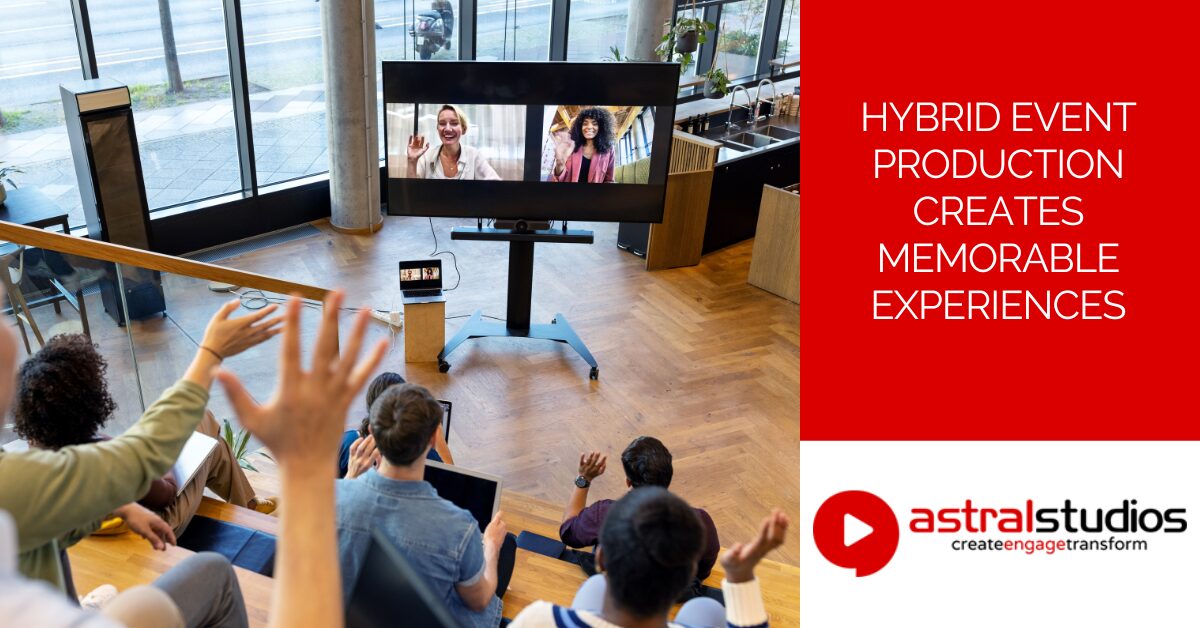
Hybrid Event Production Creates Memorable Experiences
Last Updated: 1 year ago by Astral Studios Staff
The concept of hybrid events has reached a gold standard where an organization can combine the best of both worlds: virtual and in-person. Be it a large corporate meeting or a government seminar, hybrid events will give you flexibility and broader reach. Let’s explore why hybrid event production is creating memorable experiences and why it’s the perfect solution for today’s evolving event needs.
What is Hybrid Event Production?
A hybrid event combines the convenience of virtual attendance with the richness of a live experience. It is like attending a conference physically and online at the same time. This model gives companies the power to engage more people, no matter where they are.
Unlike a traditional face-to-face event, hybrid events allow different locations to join the event through live streaming, while at the same time, those physically present enjoy the usual networking and hands-on engagement. The balance between these two formats makes hybrid events unique and powerful.
Benefits of a Hybrid Event
Wider Reach and Accessibility
The beauty of hybrid events is that they bring together people from all over the world without them having to travel. Because of virtual attendance, more can join with fewer typical logistic hurdles in the way, such as traveling costs or scheduling conflicts. Events also become more accessible for those people who have either limitations or other concerns attending in person.
Still, face-to-face interaction still has a major bearing on this matter. By being physically present, attendees continue to enjoy networking opportunities, social interactions, and dynamic energy for the event. This, of course, all together encompasses those elements which would make such an occasion justifiably unforgettable among audiences.
Flexible Content Delivery
Hybrid event production does allow for a fair degree of flexibility when it comes to content delivery. For virtual participants, live webcasting is an exciting way to cover an event for real-time witnessing. Even if they are not there during the live event, usually hybrid setups allow recordings that are available for later on-demand viewing.
This ensures your content reaches attendees at their convenience. You can continue engaging people long after the event has ended by offering recorded sessions for later access.
Multi-Platform Integration
Successful hybrid events require seamless multi-platform integrations. You achieve this by synchronizing your virtual and live events using event technology. For example, registration tools can track both types of participants, and event production tools ensure that live streaming goes off without a hitch.
Event analytics are also crucial for multi-platform integration. These tools help you track engagement metrics, such as how many virtual attendees participated and which sessions were most popular, which helps you constitute where to do better in the future. This understanding helps you fine-tune your hybrid event strategy going forward.
Enhancing Audience Engagement
One of the most challenging aspects of event planning is maintaining high audience engagement. This becomes even more critical in a hybrid event, where virtual and in-person attendees may have different needs. Luckily, a hybrid setup offers many ways to engage both groups effectively.
Interactive Elements
Engagement thrives when people feel involved. Hybrid event production excels here by incorporating interactive elements like live polls, Q&A sessions, and virtual chat rooms. These tools keep virtual attendees active and engaged, just as much as those on-site. Whether you’re running a corporate presentation or a government seminar, these interactive features boost participation and keep energy levels high.
Networking Opportunities
A good hybrid event also leaves time and space for networking. For many delegates, this is the rationale for attending an event. In-person attendees get to meet face-to-face, exchange business cards, and have those watercooler conversations that only happen in a physical setting.
Meanwhile, virtual attendees can join online networking rooms, video chats, and even participate in moderated group discussions. Hybrid events ensure that every attendee has the opportunity to connect through either virtual or in-person opportunities by offering both types of networking.
Participant Feedback
Feedback is essential to improving future events. Hybrid event technology makes gathering feedback easier than ever. With real-time polls and post-event surveys, you can quickly assess how engaged participants were and what aspects of the event could improve.
For example, event analytics can show you which virtual sessions had the most participation or where in-person attendees spent the most time. This feedback can be used to refine your hybrid event strategy, ensuring even more successful future events.
Key Components of a Successful Hybrid Event Strategy
A well-planned hybrid event requires careful coordination of various elements to ensure both virtual and in-person participants feel equally involved.
Event Technology
At the core of every hybrid event is reliable event technology. Tools like registration systems, content delivery platforms, and event production software keep everything running smoothly. These systems ensure that virtual attendees can log in easily, access content, and engage without technical hiccups. For in-person attendees, this technology ensures that presentations, audio-visuals, and other event elements function flawlessly.
Event Production
It also takes a great deal of professional event production to make a hybrid experience seamless. This is beyond just placing cameras and microphones; rather, it’s about ensuring everything from lighting to audio is just right. A well-produced hybrid event ensures the content will feel engaging for both in-person and virtual attendees.
Live Streaming
Live streaming is the heart of any hybrid event. It allows virtual attendees to be part of the event in real time. To ensure success, the streaming must be high-quality with no lags, buffering, or audio issues. Many companies use multiple cameras to give online participants different perspectives and angles. This makes the virtual experience more dynamic and engaging.
Additionally, some hybrid events provide interactive live streaming, where virtual attendees can engage with speakers through Q&A sessions, chat features, and live polling. This gives them the sense of being in the room, even if they’re miles away.
Event Marketing
Before the event, proper event marketing is essential to attract attendees. Marketing campaigns for hybrid events need to target both in-person and virtual participants. Highlighting the benefits of both experiences will encourage a higher turnout. Some people may prefer networking in person, while others might opt for the convenience of attending virtually.
You can use social media, email marketing, and paid ads to reach potential attendees. Marketing can also explain key features of the event, like networking opportunities, live streaming, and interactive elements. Promoting these features will increase excitement and registration.
Registration Tools
Having user-friendly registration tools for hybrid events is crucial. These tools allow participants to easily choose between virtual or in-person attendance during registration. A good system also sends reminders and gives clear instructions on how to join the event, whether online or in-person.
For virtual attendees, providing an easy-to-use link for live streaming access is critical. For in-person attendees, clear communication about the venue, schedule, and any health protocols ensures a smooth experience. In both cases, registration tools simplify the process and improve overall event organisation.
Conclusion
Hybrid events offer the best of both worlds—combining the excitement of an in-person experience with the flexibility of virtual attendance. With a strong hybrid event strategy, you can increase audience engagement, expand your reach, and deliver high-quality content that resonates with all participants. From interactive elements to top-notch event production, hybrid events are reshaping the future of business, corporate, and government gatherings.
When planned and executed properly, hybrid event production creates memorable experiences that leave a lasting impression on everyone involved.
FAQ
What is a hybrid event?
A hybrid event is a gathering that combines both in-person and virtual experiences. Attendees can participate either by physically attending the event or by joining remotely through live streaming or other online platforms.
Why are hybrid events popular?
Hybrid events are popular because they offer flexibility. They allow more people to attend, whether in person or from anywhere in the world. They also provide better opportunities for engagement and networking for a broader audience.
How can hybrid events improve audience engagement?
Hybrid events can improve engagement by offering interactive elements like live polls, Q&A sessions, and chat features. These tools allow both virtual and in-person attendees to interact with speakers and each other in real-time.
What technologies are needed for hybrid events?
Technologies needed for hybrid events include live streaming platforms, high-quality audio-visual equipment, event registration tools, and event analytics software. You may also need multi-platform integration to ensure a seamless experience across devices.
What role does event production play in hybrid events?
Event production ensures that the technical and creative elements of a hybrid event run smoothly. This includes managing lighting, sound, cameras, and live streaming. A well-produced event creates a seamless experience for both in-person and virtual audiences.
How do you measure the success of a hybrid event?
You can measure the success of a hybrid event by tracking audience engagement, participant feedback, and event analytics. Key metrics might include attendance rates, interaction levels, and feedback from both in-person and virtual attendees.

