


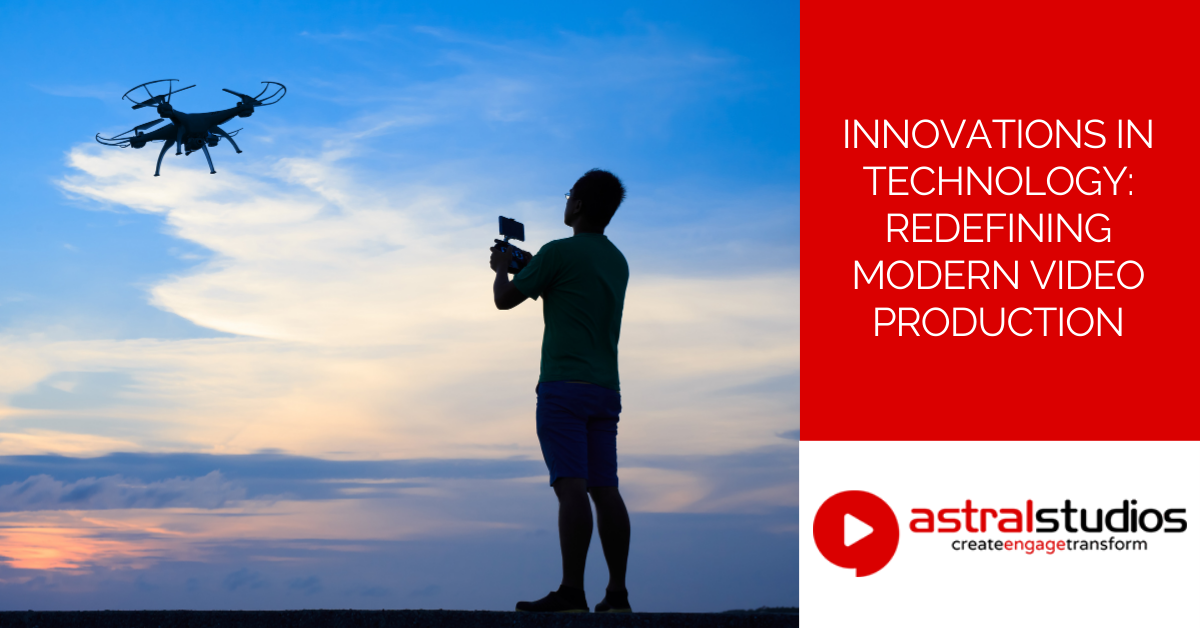
Innovations In Technology: Redefining Modern Video Production
Last Updated: 7 months ago by Astral Studios Staff
Video has become the cornerstone of digital communication, from bite-sized TikTok clips to high-budget corporate campaigns. But what’s truly reshaping the industry is the relentless pace of innovations in technology.
Gone are the days when video production was limited to bulky cameras and linear editing workflows. Today, artificial intelligence (AI) edits footage faster than humans, drones capture cinematic aerial shots once reserved for helicopters, and interactive videos empower viewers to steer narratives.
These innovations in technology aren’t just changing how we create—they’re redefining what’s possible. Let’s dive into the tools and trends revolutionizing storytelling, accessibility, and creativity.
1. Artificial Intelligence (AI): The Creative Powerhouse
AI is no longer a futuristic concept—it’s a practical collaborator in video production, automating tedious tasks and unlocking creative potential.
AI-Powered Editing: Speed Meets Precision
Platforms like Magisto use machine learning to analyze raw footage, identify key moments, and assemble polished videos complete with transitions and soundtracks. For time-strapped creators, this means producing social media ads, event recaps, or training videos in minutes instead of hours. AI even adjusts pacing based on emotional cues, ensuring the final product resonates with audiences.
Text-to-Video: Bridging Content Formats
Synthesia transforms written scripts into dynamic videos using hyper-realistic AI avatars. Need to localize a campaign for global markets? The same script can generate videos in 120+ languages, complete with lip-synced narration. This innovation in technology eliminates the need for multilingual actors or reshoots, slashing costs and timelines.
Voice Cloning: Breaking Barriers
Tools like Descript clone voices with uncanny accuracy. Imagine replicating a brand spokesperson’s voice for consistent messaging or resurrecting historical figures for educational content. While ethical debates persist, the efficiency gains—especially for podcasts, audiobooks, and automated customer service—are undeniable.
Key Takeaway: AI isn’t replacing creators—it’s amplifying their capabilities. By handling repetitive tasks, it frees humans to focus on strategy, emotion, and storytelling.
2. Interactive Video: Engaging Audiences on Their Terms
Interactive video turns passive viewers into active participants, blending storytelling with user-driven choice.
How It Works: Choice-Driven Narratives
Viewers click hotspots, answer polls, or navigate branching storylines. For example, a travel brand might let users “explore” safari lodges or urban landmarks within a single video. Retailers use shoppable videos where viewers click products to purchase instantly, merging entertainment with e-commerce.
Why Brands Love It: Measurable Impact
- Retailers report 30% higher click-through rates with interactive ads.
- E-learning platforms see 40% better retention when quizzes are embedded in training videos.
- Real estate agencies using 360° virtual tours note 25% more inquiries from prospective buyers.
Tools like Vimeo and Wistia simplify adding interactive elements, democratizing this innovation in technology for businesses of all sizes.
3. VR/AR: Immersive Storytelling Unleashed
Virtual Reality (VR) and Augmented Reality (AR) are redefining immersion, offering experiences that blur digital and physical worlds.
VR: Beyond Gaming
VR headsets transport users to fully digital environments—think swimming with sharks or attending a virtual concert. Brands like BMW use 360° VR videos for virtual test drives, letting customers explore car interiors and features from home. Event organizers leverage VR for hybrid conferences, where remote attendees explore digital booths and network via customizable avatars.
AR: Enhancing Reality
AR overlays digital elements onto the real world through smartphones or smart glasses. IKEA Place lets users visualize furniture in their living rooms, while beauty brands like Sephora offer AR try-ons for makeup. These innovations in technology bridge imagination and reality, driving engagement and reducing buyer hesitation.
Production Insight: Creating VR/AR content requires tools like Adobe Premiere Pro for 360° editing and Unity for building interactive AR experiences.
4. Drone Videography: Elevating Perspectives
Drones have democratized aerial cinematography, offering angles that were once prohibitively expensive.
Why Drones Are Game-Changers
- Cost Efficiency: No need for helicopters or cranes—drones capture sweeping landscapes and dynamic action shots at a fraction of the cost.
- Creative Flexibility: Film everything from rugged coastlines to bustling cityscapes, or livestream events like marathons and weddings in real time.
- Accessibility: Compact drones like the DJI Mavic series empower indie filmmakers to compete with studio-grade productions.
In South Africa, the SACAA mandates permits for commercial drone use, with strict no-fly zones near airports and protected areas. Operators must prioritize safety, monitoring weather and battery life to avoid accidents.
5. Cloud Workflows: Collaboration Without Borders
Cloud-based tools are erasing geographical barriers, enabling seamless teamwork across continents.
Camera-to-Cloud Integration
Platforms like Frame.io allow footage to upload directly from cameras to the cloud during shoots. Editors in Johannesburg can review clips in real time while directors fine-tune scenes in Cape Town, drastically shortening production cycles.
Real-Time Rendering: The Future of Sets
Shows like The Mandalorian use LED walls to display photorealistic digital backdrops during filming. Actors interact with environments in real time, eliminating post-production green screen work. This innovation in technology not only saves time but also enhances performances by grounding actors in tangible settings.
6. Accessibility: Inclusive Video for All
Innovations in technology are making video content accessible to diverse audiences, including those with disabilities.
Auto-Generated Captions
AI tools like YouTube’s auto-captioning create accurate subtitles instantly, essential for viewers with hearing impairments. New advancements even identify speakers and contextual sounds (e.g., applause or doorbells).
Sign Language Avatars
Apps like SignAll translate spoken dialogue into sign language via animated avatars, ensuring deaf audiences don’t miss critical information.
Audio Descriptions
Narrated descriptions of visual elements (e.g., “John enters a dimly lit room, clutching a letter”) help visually impaired viewers follow along. Streaming giants like Netflix now prioritize this feature, setting a benchmark for inclusivity.
7. Personalized Video: Hyper-Relevant Content
AI-driven personalization tailors videos to individual viewers, boosting engagement and conversions.
How It Works
Using data like location, browsing history, or past purchases, platforms like Dynamic Yield generate custom videos. A travel agency might show Cape Town residents ads for European ski trips while targeting Durban viewers with tropical beach vacations.
The Results Speak for Themselves
- E-commerce brands see 50% higher click-through rates with personalized product demos.
- Nonprofits using personalized donation appeals report 35% increased contributions.
Conclusion: The Future of Video is Here
From AI’s lightning-fast editing to VR’s immersive worlds, innovations in technology are reshaping video production at every level. Yet, the core of compelling content remains unchanged: human creativity. These tools aren’t replacements—they’re collaborators, empowering storytellers to push boundaries and connect with audiences in deeper ways.
As you scroll through your next video feed, take a moment to appreciate the tech behind the scenes. Better still, experiment with these tools yourself. The future of video isn’t just arriving—it’s already here.
At Astral Studios, we don’t just keep up with innovations in technology—we pioneer them. Whether you’re dreaming of AI-driven storytelling, breathtaking drone cinematography, or immersive VR experiences, our team is here to turn your ideas into unforgettable visuals.
Your story deserves the spotlight. Let’s light it up. Contact us today!
References
Frequently Asked Questions
How is Artificial Intelligence (AI) transforming video production?
AI is revolutionizing video production by automating tasks like editing, transcription, and content creation. Tools like Magisto analyze raw footage to suggest edits, while Synthesia generates videos from text using AI avatars. AI also powers voice cloning and real-time color grading. However, ethical concerns around AI ethics—like job displacement and copyright issues—are hotly debated.
What are interactive videos, and how do they engage audiences?
Interactive videos let viewers click, choose story paths, or explore 360° environments. Examples include shoppable videos with clickable products and branching narratives for personalized experiences. Platforms like Vimeo and Wistia enable features like quizzes and hotspots, boosting engagement in marketing, education, and real estate.
How do VR and AR enhance video experiences?
Virtual Reality (VR) immerses viewers in 360° environments via headsets, ideal for virtual tours or training simulations. Augmented Reality (AR) overlays digital elements onto real-world scenes, like IKEA Place for furniture previews. These technologies create memorable experiences but require careful 360° video stitching to avoid visual glitches.
What are the benefits of drone videography?
Drones capture cinematic aerial shots at a fraction of the cost of helicopters. They’re used in real estate, tourism, and events for dynamic perspectives. Modern drones with gimbals deliver smooth drone shots, while live streaming capabilities enable real-time coverage. Always check drone regulations for safe operation.
How do cloud-based workflows improve video production?
Cloud tools like Frame.io allow remote collaboration, letting editors work on footage instantly after capture. Real-time rendering and virtual production (using LED walls) streamline workflows, reducing post-production delays. This is especially useful for global teams.
What accessibility features are vital in modern video production?
Key features include automated closed captions, audio descriptions, and sign language avatars (e.g., SignAll). These ensure content is inclusive for viewers with hearing or visual impairments, complying with standards like WCAG 3.0.
What is personalized video content?
Personalized videos use AI to tailor content based on viewer data, like location or browsing history. For example, Dynamic Yield customizes ads for different audiences. This boosts engagement but requires careful handling of user data to avoid privacy issues.
How is live streaming evolving?
Live streaming now supports 4K and 360° video, creating immersive experiences for virtual events. Platforms like YouTube Live enable real-time interaction through polls and Q&A sessions, making remote audiences feel connected.
What ethical concerns arise with AI in video production?
AI raises questions about deepfakes, copyright, and job displacement. While tools like Descript clone voices efficiently, over-reliance on AI risks losing the human touch critical for authentic storytelling.
What tools are used for creating interactive videos?
Platforms like Genially and Rapt Media let creators add clickable elements, quizzes, and branching paths. These tools simplify designing interactive ads, training modules, or virtual tours without coding.
References

