


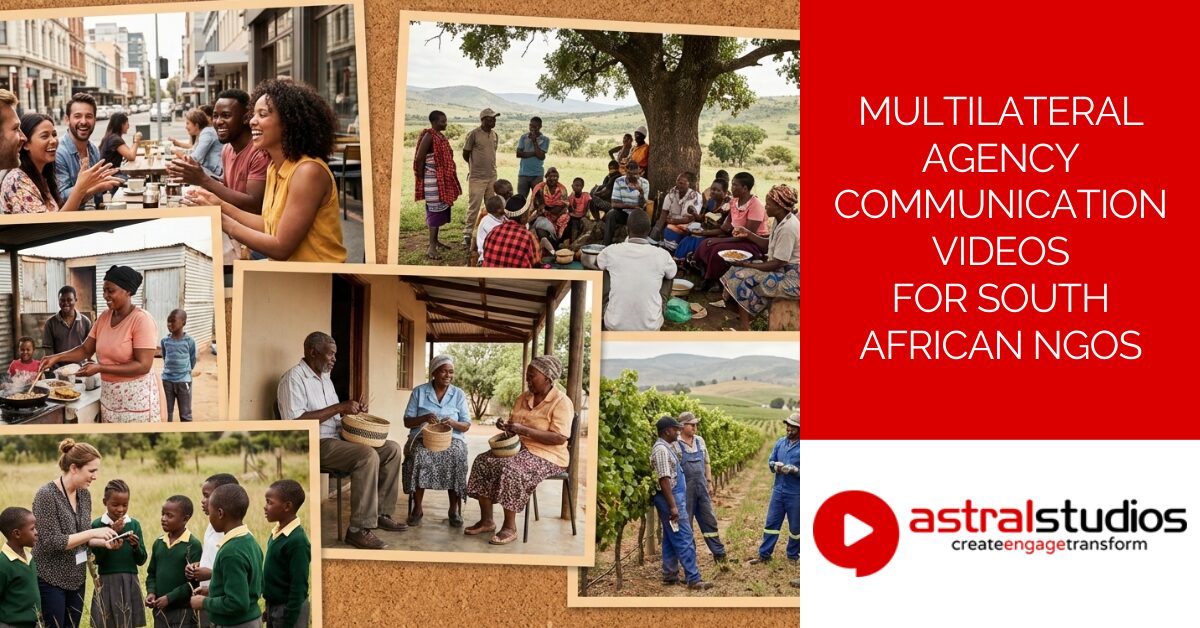
Multilateral Agency Communication Videos for South African NGOs
Last Updated: 1 month ago by Astral Studios Staff
Agency communication through video has become the backbone of how NGOs connect with donors and communities. This article shows you how multilateral agency communication videos can transform your organisation’s impact in South Africa.
I remember sitting in a cramped office in Braamfontein three years ago. The programme director of a local education NGO was showing me their annual report. Beautiful statistics. Compelling data. But when I asked how many people actually read it, she laughed. “Maybe five,” she said. “Our donors want to see the work, not read about it.”
That conversation changed everything.
Why Video Communication Works for Development Organisations
Your donors scroll through hundreds of posts daily. They watch videos while waiting for coffee. They share content that moves them. Text-heavy reports gather dust in email folders.
The numbers tell the story. Videos generate 1200% more shares than text and images combined. People remember 95% of a message when they watch it. Only 10% sticks when they read it.
But here’s what matters more. Video shows the real people behind your programmes. It captures the moment a child reads their first sentence. The relief on a mother’s face at a health clinic. The pride in a community leader’s voice.
You can’t fake that emotion in a written report.
Understanding Agency Communication in Your Context
Agency communication means how your organisation shares its mission with the outside world. It’s the strategy behind every message you send. Every story you tell. Every donor you reach.
Think of it as your organisation’s voice. Not just what you say, but how you say it. When you say it. Who hears it.
For multilateral agencies, this gets complex fast. You’re juggling multiple stakeholders. International donors want accountability. Local governments need transparency. Partner organisations require coordination. Communities deserve dignity.
One message rarely fits everyone.
The South African NGO Landscape
Over 283,000 nonprofits operate in South Africa. You’re competing for attention in a crowded space. The big players like World Vision and Save the Children have massive budgets. Smaller community organisations do incredible work with almost nothing.
Video levels the playing field somewhat. A compelling three-minute story can move donors just as much as a glossy annual report. Sometimes more.
The development sector here focuses on HIV/AIDS, education, poverty relief, and women’s rights. Environmental work is growing. So is youth unemployment programming. Each area needs different communication approaches.
How Multilateral Agency Communication Videos Drive Results
Last year, a Johannesburg-based women’s empowerment NGO made a simple video. Two minutes long. Shot on a phone. It featured three women talking about their small business training programme.
That video raised R180,000 in six weeks.
The secret? Authenticity. Real voices. No corporate polish. Just honest stories about real change.
The Two-Stage Communication Process
Your video strategy should mirror how donors actually engage. First comes mass communication. You cast a wide net. Social media posts. YouTube content. Email campaigns. You’re building awareness.
Then comes the personal touch. Individual follow-ups. Targeted messages. Specific asks. This is where conversions happen.
Video works at both stages. A powerful awareness video introduces your mission. Personalised video messages thank donors and show impact. Different videos for different moments.
Types of Videos That Work for NGOs
Here’s what actually gets results:
Mission videos explain who you are in 90 seconds. They hook new supporters fast. Keep them short. Lead with emotion.
Fundraising appeals make the ask directly. Show the problem. Present your solution. End with a clear call to action. These convert best when they’re 2-3 minutes.
Impact stories prove your work matters. Feature real beneficiaries. Let them tell their stories. Show before and after. Numbers help but faces matter more.
Behind-the-scenes content builds trust. Show your team at work. Explain how donations get used. Transparency converts skeptics into supporters.
A children’s education NGO in Cape Town does this brilliantly. They post weekly 60-second clips showing classroom activities. Simple stuff. Kids learning. Teachers teaching. But donors see exactly where their money goes.
Choosing Between Live Action and Animation
This question comes up constantly. Should you film real people or create animated content? The answer depends on what you’re trying to say.
When Live Action Makes Sense
Use live action when authenticity matters most. Real faces create real connections. A mother talking about healthcare access hits harder than any animation could.
Testimonials need live action. So do community stories. Documentary-style content showing actual programmes at work. These build trust because people see reality.
I watched a rural health NGO film patients at a mobile clinic. Simple interviews. Basic camera work. The impact? Massive. Donors could see themselves making a difference in real lives.
Live action also works for:
- Staff introductions and team profiles
- Event coverage and programme launches
- Donor site visits and field work
- Volunteer recruitment campaigns
The downsides? Cost and logistics. You need crew, equipment, locations. Weather affects shooting. Updates mean reshooting everything. Budget between R50,000 to R200,000+ depending on complexity.
When Animation Works Better
Animation shines when explaining complex ideas. Try filming “how systemic poverty works” with a camera. Good luck. But animation can visualise abstract concepts easily.
Policy explanations need animation. So do process demonstrations. Data visualisations. Systems thinking. Anything too complicated or abstract to film.
A public health NGO used animation to explain HIV transmission and prevention. Clear graphics. Simple language. Translated into five languages. One production, multiple uses. That’s efficiency.
Animation also helps when:
- Privacy matters and you can’t show real faces
- Explaining technical programme mechanisms
- Creating content for multiple language groups
- Building reusable assets that don’t date quickly
Costs run lower usually. R30,000 to R80,000 for most projects. No location fees. No travel. Easy updates. Longer shelf life.
The Hybrid Approach
Smart organisations mix both. Start with a real person’s story. Then animate the data showing wider impact. This combines emotional connection with clear explanation.
An environmental NGO in Durban does this well. They film community members talking about water access. Then animate regional water statistics and climate data. The combination tells both personal and systemic stories.
Building Your Video Content Strategy
Strategy sounds boring but it’s just planning. You wouldn’t launch a programme without planning. Don’t launch video content without it either.
Start With Clear Goals
What do you actually want? More monthly donors? Increased volunteer applications? Policy influence? Different goals need different videos.
Be specific. “Raise awareness” isn’t a goal. “Get 500 new email subscribers by June” is. “Generate 15 corporate partnership enquiries” works too. Measurable targets guide everything else.
Know Your Audiences
You can’t speak to everyone at once. Break down who you’re trying to reach.
International donors want accountability and impact metrics. Show them numbers and outcomes. Local corporate funders care about CSI alignment and tax benefits. Community partners need respect and collaboration signals.
One video rarely serves all groups. Plan different content for different stakeholders.
| Audience Type | Video Focus | Ideal Length | Key Elements |
|---|---|---|---|
| International Donors | Impact metrics, transparency | 3-5 minutes | Data, testimonials, clear outcomes |
| Corporate Partners | Alignment, brand safety | 2-3 minutes | Professional production, measurable results |
| Individual Donors | Emotional connection | 60-90 seconds | Personal stories, clear call to action |
| Government Partners | Reach, effectiveness | 4-6 minutes | Scale, coordination, policy alignment |
| Community Members | Respect, empowerment | 2-3 minutes | Local languages, cultural sensitivity |
Develop Your Key Messages
What must people remember? Boil it down to three core ideas. More than that and people forget everything.
An education NGO might focus on: “Every child deserves quality learning. We provide teacher training that works. Your support creates lasting change.”
Simple. Clear. Memorable.
Repeat these messages across all content. Consistency builds recognition. Recognition builds trust.
Making Videos People Actually Watch
Production quality matters but not as much as you think. I’ve seen slick R200,000 productions get 200 views. And phone videos hit 50,000. The difference? Story.
Hook Them Fast
You have three seconds. That’s it. Lead with emotion or surprise. Start with your strongest moment.
Bad opening: “Our organisation was founded in 2008…” Good opening: “Sarah couldn’t read at age 12. Today she’s teaching others.”
Show the transformation first. Explain the background later.
Keep It Short
Attention spans are shrinking. Two minutes is perfect for most NGO content. Three minutes maximum unless you’ve got an incredible story.
Social media needs even shorter content. Instagram wants 60 seconds. TikTok prefers 30. Edit ruthlessly.
A poverty alleviation NGO tested this. They cut their five-minute appeal to 90 seconds. Completion rate jumped from 18% to 67%. Donations increased by 42%.
Include Clear Calls to Action
Tell people exactly what to do next. “Donate now at…” “Visit our website to…” “Share this video to…”
Vague endings waste good content. You built emotion. You showed impact. Now channel that energy into action.
One youth development organisation tested different CTAs. “Learn more” got clicks. “Donate R500 to sponsor a learner” got three times more conversions. Specific beats general every time.
Ethical Storytelling That Respects Dignity
This part matters enormously. How you represent people in your videos reflects your values. Get it wrong and you damage both your reputation and the communities you serve.
Avoid Poverty Pornography
You know those videos. Sad music. Desperate faces. Voice-over talking about “helping these poor people.” They’re manipulative. They’re demeaning. They reduce human beings to objects of pity.
Don’t make those videos.
Show challenges honestly but balance them with agency and hope. People facing difficulties aren’t helpless. They’re resourceful. They’re dignified. And they’re working toward solutions.
Frame stories as partnerships, not rescues. “We’re supporting Maria’s business training” not “We’re saving Maria from poverty.”
Get Real Consent
Informed consent means people understand how you’ll use their image. Where it’ll appear. Who’ll see it. How long you’ll use it.
Explain this in their language. Let them ask questions. Give them time to decide. Some people might say no. Respect that.
A disability rights NGO learned this hard way. They filmed a powerful testimonial. Shared it widely. Then discovered the person didn’t understand their face would be on social media. The relationship damage took months to repair.
Let People Tell Their Own Stories
Stop narrating over people’s lives. Hand them the mic. Let them speak directly to camera. Use their words, not your script.
First-person narratives work better anyway. “I started this business…” beats “She started this business…” The connection feels more direct. More honest.
When you need narration, at least use quotes and attribution. “As Thandi explains…” gives her ownership of the story.
Technical Production Basics
You don’t need Hollywood budgets. But you do need certain basics to look credible.
Sound Matters More Than Picture
Bad audio kills good video. People will watch shaky footage if they can hear clearly. But perfect images with terrible sound? They’ll click away immediately.
Use external microphones. Even cheap lavalier mics beat camera audio. Record in quiet spaces. Listen on headphones while filming.
A rural development NGO shot beautiful footage of their farming programme. But wind noise made the interviews unusable. They had to reshoot everything. Learn from their mistake.
Lighting Doesn’t Need to Be Complicated
Natural light works brilliantly. Film near windows. Shoot outdoors during golden hour (early morning or late afternoon). Avoid harsh midday sun.
If you’re shooting indoors without windows, you’ll need lights. But even basic LED panels from camera shops work fine. You’re not making cinema. You’re creating NGO content.
Drone Footage Adds Impact
Aerial shots show scale beautifully. They work especially well for environmental and community development projects. Flying over a new water system or community garden gives viewers perspective.
Drone operators in Johannesburg charge R5,000 to R15,000 per day. Worth it for flagship videos. Just check regulations and get permissions first.
Subtitles Are Mandatory
Most people watch social media videos without sound. If you don’t have captions, you’ve lost 85% of potential viewers immediately.
Subtitle everything. Burned-in text works best for social media. Separate subtitle files work for YouTube and websites.
Multilingual subtitles extend your reach too. South Africa has 11 official languages. At minimum, subtitle in English and the main language of your programme area.
Platform-Specific Strategies
Different platforms need different approaches. What works on YouTube fails on Instagram.
YouTube for Long-Form Content
YouTube handles longer videos well. Use it for detailed impact stories, event coverage, educational content. Aim for 3-5 minutes.
Optimise titles and descriptions for search. “Women’s Empowerment Programme Results 2024” is better than “Our Latest Video.” Add timestamps in descriptions. Use relevant tags.
Create playlists by theme. One for impact stories. Another for programme updates. Makes your channel easy to navigate.
Instagram and TikTok for Quick Impact
These platforms demand vertical video and speed. First three seconds must grab attention. Hook, story, call to action. All under 60 seconds.
Use trending sounds when appropriate. Add text overlays. Include hashtags strategically.
A youth mentorship NGO grew from 200 to 12,000 followers in eight months using 30-second success stories. Short format. Big impact.
LinkedIn for Professional Audiences
Corporate donors and potential board members hang out here. Professional tone works better. Focus on measurable outcomes and organisational achievements.
Horizontal video works fine on LinkedIn. Slightly longer form is acceptable. 2-3 minutes. Include data and specifics.
Facebook for Community Building
Facebook still works for building donor communities. Live streaming creates engagement. Behind-the-scenes content performs well. Comments and shares matter more than views.
Post consistently. Two to three times weekly keeps you visible. Mix video types. Not every post needs to be a fundraising ask.
Measuring What Matters
You can’t improve what you don’t measure. Track the right numbers to understand what’s working.
Views Aren’t Everything
A million views mean nothing if nobody donates. Focus on metrics that connect to your goals.
Watch time matters more than view count. A video with 500 complete views beats 5,000 views where people clicked away after five seconds.
Track Conversion Actions
How many people clicked your donation link? Signed up for newsletters? Filled out volunteer forms? These numbers tell you if your video actually works.
Use UTM codes on links. Google Analytics shows exactly which videos drive which actions. This data guides future decisions.
Engagement Signals Quality
Comments, shares, and saves indicate people care. Social platforms show your content to more people when engagement is high. So these metrics matter both directly and indirectly.
Read comments carefully. They tell you what resonates. What confuses people. What questions they have. Let this feedback shape your next videos.
Working With Production Companies
Sometimes DIY isn’t enough. Flagship campaigns need professional production. Finding the right partner makes all the difference.
Look for NGO Experience
Corporate video companies don’t always understand development work. The ethics differ. The storytelling differs. Find producers who’ve worked with nonprofits before.
Check their portfolio. Do their videos feel authentic? How well do they handle sensitive subjects? Do they showcase real impact?
Budget Honestly From the Start
Tell producers what you can actually spend. Good ones will suggest approaches that fit your budget. Maybe animation instead of live action. Perhaps fewer shooting days. Maybe existing footage with new interviews.
Expect to pay R40,000 minimum for basic professional production. R80,000 to R150,000 for something substantial. R200,000+ for major campaigns with multiple locations and complex production.
Communicate Your Values Clearly
Share your ethical guidelines upfront. Explain how you want communities represented. Discuss consent processes. Make sure they understand beneficiary dignity isn’t negotiable.
A health NGO once hired producers who pushed for “more emotional” footage. They wanted closer shots of suffering. The NGO pushed back. The producers didn’t understand at first but eventually got it. That conversation should happen before filming starts.
Building Internal Capacity
You can’t outsource everything. Building basic video skills internally saves money and creates flexibility.
Start Simple
Modern phones shoot incredible video. Start there. Film short programme updates. Interview staff members. Capture events. You’ll learn by doing.
Free editing apps like CapCut work fine for social media content. YouTube has thousands of tutorial videos. You don’t need film school.
Train Interested Staff
Someone in your organisation already loves making content. Find that person. Give them time to develop skills. Send them to workshops. Budget for a decent camera and mic.
One environmental NGO trained their communications officer in basic video. She now produces 80% of their content in-house. They only hire external producers for major campaigns. This saves tens of thousands annually.
Know When to Go Pro
Some projects need professional production. Annual fundraising campaigns. Major donor presentations. Partnership videos. Don’t try to DIY everything.
Reserve budget for high-stakes content. Let professionals handle complex shoots. Use your internal capacity for routine updates and social content.
The Funding Reality
Video production costs money. Where do you find it?
Build It Into Grant Budgets
Most funders understand communication matters. Include video costs in programme budgets. Frame it as documentation and accountability. Which it is.
A line item for “impact documentation and donor communication” sounds more fundable than “marketing video.” Even though it’s the same thing.
Seek Communications Capacity Grants
Some funders specifically support communications strengthening. The DG Murray Trust sometimes funds capacity building. So does the Bertha Foundation. Research options.
International donors like the Global Fund and UK aid programmes often require visual documentation. That’s your budget justification right there.
Pool Resources With Partners
Three small NGOs working in the same area could share production costs. Film all three organisations in one shoot. Split costs three ways. Everyone gets content.
I’ve seen this work beautifully in Mpumalanga. Four education NGOs hired one production company for a two-day shoot. Each got two videos. Cost per organisation dropped by 60%.
Current Trends Shaping NGO Video
The landscape keeps changing. Here’s what’s happening now.
Short-Form Content Dominates
TikTok and Instagram Reels changed everything. People expect quick hits of information. 15 to 60 seconds. Fast pacing. Strong hooks.
NGOs adopting this format see massive reach increases. A conservation organisation in KZN grew their audience by 400% in 2024 using 30-second wildlife clips. Same content they always filmed. Different editing approach.
Mobile-First Everything
Over 90% of South Africans access Internet via mobile. Design for small screens. Vertical video. Large text. Simple compositions.
Test your videos on phones before publishing. If you can’t read text or see faces clearly on a phone, fix it.
Authenticity Beats Polish
Younger donors especially want real content. They scroll past corporate-feeling videos. They stop for authentic moments.
A mental health NGO posts unedited phone videos of staff talking about their work. Rough around the edges. But genuine. Their engagement rates doubled when they dropped the perfect polish.
Common Mistakes to Avoid
Learn from others’ expensive lessons.
Making Videos Without Strategy
Random content doesn’t build momentum. One-off videos disappear into the void. You need consistent themes. Regular posting. Clear progression.
Plan at least three months ahead. Map content to campaigns and appeals. Create series rather than standalone pieces.
Forgetting Mobile Viewers
Horizontal video with small text fails on phones. Design for mobile first. Desktop second.
Ignoring Accessibility
Deaf people can’t hear your emotional narration. Blind people can’t see your powerful visuals. Subtitles and audio descriptions aren’t optional extras. They’re baseline accessibility.
Overwhelming With Information
Your organisation does 15 different programmes. Amazing. Don’t try to explain all 15 in one video. Pick one story. Tell it well.
Weak Calls to Action
“Find out more” tells people nothing. “Donate R500 to sponsor a child’s education at donate.yourorg.org” tells them exactly what to do.
Looking Ahead
Video will only grow more important. Platforms keep prioritising it. Donors increasingly expect it. The question isn’t whether to invest in video, it’s how to do it well.
Start where you are. Use what you have. A phone camera and decent story beats expensive equipment with no strategy.
Test different approaches. Track results. Double down on what works. Cut what doesn’t.
Remember why you’re doing this. Video isn’t the goal. Impact is. Video just helps you show that impact. Keep the focus on real people and real change.
South Africa’s development sector does extraordinary work. Often with tiny resources. Video helps amplify that work. It brings more supporters to your cause. More resources to your programmes. More attention to the communities you serve.
The stories need telling. Make sure you’re the one telling them.
Partner With Specialists Who Understand Development Work
Creating videos that respect dignity while driving results requires both technical skill and sector understanding. Astral Studios brings years of experience producing content for organisations doing critical work across South Africa.
We understand the balance between emotional appeal and ethical representation. Between budget constraints and quality requirements. Between quick social content and flagship campaigns.
Contact us to discuss how video can strengthen your organisation’s communication and expand your impact.
Frequently Asked Questions
How much does professional NGO video production cost in South Africa?
Basic professional videos start around R40,000. This gets you simple interviews or short programme updates. Mid-range projects run R80,000 to R150,000. These include multiple locations, better production quality, and more complex storytelling. Major campaigns with drone footage, animation, and extensive shooting cost R200,000 or more. Animation typically costs less than live action, ranging from R30,000 to R80,000 for most projects.
Should we make videos in-house or hire professionals?
Both. Use internal capacity for routine social media content, event coverage, and quick updates. Your phone camera works fine for these. Hire professionals for flagship fundraising campaigns, annual appeals, major donor presentations, and complex productions. This hybrid approach balances cost with quality. Train someone on staff in basic video skills to handle day-to-day needs.
How long should our NGO videos be?
Social media content works best at 60 seconds or less. Instagram and TikTok prefer 15 to 30 seconds. YouTube allows longer content, so aim for 2-5 minutes there. Fundraising appeals should run 90 seconds to 3 minutes maximum. Impact stories can stretch to 4 minutes if the narrative is compelling. Donor attention spans are short, so edit ruthlessly.
What’s better for NGOs, live action or animation?
Live action works best for testimonials, beneficiary stories, and content requiring authenticity. Real faces build trust. Animation excels at explaining complex concepts, visualising data, and creating multilingual content. It’s also better when privacy matters or you need easily updatable content. Many successful NGOs use both strategically. Start with a real story, then animate the broader impact data.
How do we get consent from people in our videos?
Explain clearly how you’ll use their image. Where the video will appear. Who will see it. How long you’ll keep using it. Do this in their home language. Give them time to decide without pressure. Get written consent if possible. Let them review footage before publishing when appropriate. Some people will say no. Respect that decision always.
Start with where your donors already spend time. Facebook still works well for community building and older donors. Instagram and TikTok reach younger supporters effectively. LinkedIn connects with corporate partners and board prospects. YouTube hosts longer content and offers good search visibility. Don’t spread too thin. Master two platforms before adding more.
How do we measure if our videos are actually working?
Track actions, not just views. How many people clicked your donation link? Signed up for newsletters? Registered as volunteers? Use UTM codes on all links so Google Analytics shows which videos drive conversions. Also watch completion rates. A video where 70% of viewers watch to the end performs better than one with more views but low completion. Comments and shares signal engagement too.
Can we use music in our NGO videos?
Yes, but carefully. YouTube’s Audio Library offers free music you can use safely. Epidemic Sound and Artlist provide affordable subscription access to quality tracks. Don’t use popular commercial songs without licensing. That gets videos blocked or muted on social platforms. When possible, use local South African musicians and compensate them fairly. This supports the creative community while avoiding copyright issues.
How often should we post video content?
Consistency beats frequency. Two quality videos monthly work better than eight rushed ones. Plan a content calendar three months ahead. Mix video types so you’re not always asking for donations. Share impact stories, behind-the-scenes content, programme updates, and appeals. Post on the same days each week so your audience knows when to expect content.
What if we don’t have budget for video production?
Start with your phone and free editing apps. CapCat or InShot work well for basic editing. Film short programme updates and staff interviews yourself. These build your skills and create content while you’re raising production budget. Include video costs in grant applications as “impact documentation.” Look for communications capacity grants from funders like DG Murray Trust. Consider partnering with other NGOs to share production costs.
How do we avoid stereotypes in development videos?
Show people with agency and dignity, not just as victims. Let beneficiaries speak for themselves in first person. Balance challenges with hope and solutions. Avoid sad music over desperate faces. Frame your work as partnership, not rescue. “We support Maria’s training” beats “We’re saving Maria from poverty.” Get feedback from the communities you film before publishing. Their perspective matters most.
Do we need subtitles on all our videos?
Absolutely yes. Most people watch social media without sound. Without captions, you lose 85% of potential viewers immediately. Subtitles also help deaf viewers and people watching in noisy environments. If you work across language groups, create versions in relevant South African languages. This shows respect and extends your reach significantly. Burned-in captions work best for social platforms.

