


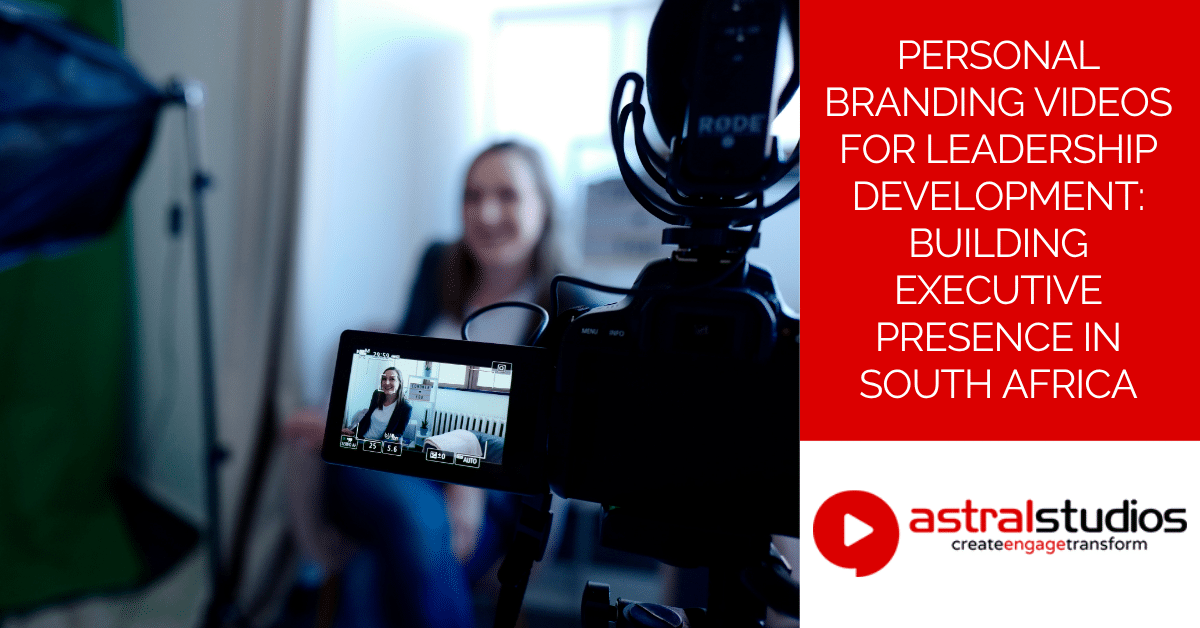
Personal Branding Videos for Leadership Development: Building Executive Presence in South Africa
Last Updated: 6 months ago by Astral Studios Staff
For effective leadership development today, building a strong personal brand is absolutely crucial. Video is proving to be your most powerful tool in this journey. People increasingly trust and engage with individuals rather than just corporate entities. This makes your unique identity and expertise important for career growth and organisational success.
Video is particularly effective because it allows you to deliver a complete message. You can convey not just words, but also tone of voice and body language. These are crucial for building emotional connections. This makes information 95% more memorable than text and offers remarkable flexibility, letting leaders learn or share anywhere, anytime.
To learn more about defining your unique brand and using specific video strategies, please read our comprehensive article below.
Your Brand, Your Story: Leveraging Video to Build Authority and Drive Results
The way leaders engage with teams, clients, and the market isn’t what it used to be. New tools and expectations have reshaped everything. The traditional corporate facade is giving way to a more human, authentic approach. This is driven by the increasing demand for genuine connection. For corporate executives in South Africa and globally, mastering personal branding is no longer a luxury. It has become a crucial aspect of leadership development and expanding one’s career success.
This isn’t about becoming a social media influencer or chasing viral fame. It’s about establishing yourself as a trusted expert, someone people turn to for insights and solutions. The digital world is increasingly personalised, with individuals preferring to follow people rather than impersonal company pages. This fundamental truth means that having strong, visible leaders is becoming paramount for any organisation aiming for sustained growth.
The Indispensable Power of Personal Branding for Leaders
Why is this shift happening? Simply put, people trust people. Trust in corporate entities can be challenging to build. The human face of a company – its leaders – has become its most powerful asset. Research shows that people are more likely to trust a company when their senior executives are active on social media. This isn’t just about optics. It translates into tangible business benefits, with socially engaged companies being 57% more likely to see increased sales leads.
Building a Synergy Between Personal and Corporate Branding
While a corporate brand establishes a company’s values, mission, and identity, a personal brand is unique to the individual. It allows for a specific, single-discipline focus. Your Chief Marketing Officer will present a different perspective and create different content than your Chief Technology Officer. This enables the company to reach diverse audiences through its various leaders.
When effectively combined, personal and corporate branding create a powerful synergy, humanising the company and reinforcing its values. Consider the impact of leaders like Richard Branson with Virgin Group or Steve Jobs with Apple. Their strong personal brands notably bolstered their corporate success, fostering engagement and loyalty. This dual approach leads to:
- Recognition and authority: Establishing leaders as true experts in their field and company.
- Visibility on a human-to-human level: Making the company more relatable and approachable.
- Customer relatability and higher retention: Fostering lasting relationships built on trust and emotional investment.
- More lucrative opportunities: Positioning the company as a well-versed competitor in its niche, attracting higher-paying clientele.
The goal is to craft and promote a distinct identity that emphasises a leader’s unique value and expertise. This isn’t about rigid archetypes. An authentic leader prioritises knowing their team on a deep, emotional level and supporting individual career goals. Your personal brand should authentically represent who you are. It should make sure your word becomes your brand, built on reliability and adaptability.
The Undeniable Power of Video in Personal Branding
Now, how do we make this personal connection truly impactful? The answer lies in video. In our current hybrid and virtual work environments, video is arguably the most powerful communication tool available when you can’t be there in person. It bridges the gap that text alone cannot, allowing you to deliver a complete communication that goes beyond mere words.
Think about it: words account for only about 7% of communication. The vast majority is conveyed through tone of voice, intonation, and body language. Video allows you to express your humanity. It fosters a deeper emotional connection with your audience in a way that simply isn’t possible with written communication. This is why video posts on platforms like LinkedIn consistently receive significantly more engagement than text-based updates.
Furthermore, video is incredibly versatile and convenient. Unlike traditional lectures, videos can be paused, rewound, and watched repeatedly until the learner feels confident in their understanding. This flexibility makes it an ideal tool for leadership development. It’s also highly portable, allowing busy executives to consume content anywhere, anytime – whether during a lunch break or even while stuck in traffic (though not while driving, of course!).
Actionable Video Strategies for Leadership Development
So, how can you, as an executive, harness the power of video for your personal brand and, by extension, for your organisation’s leadership development? Here are several strategies:
Personal Branding Through Direct Engagement
Build trust and visibility by creating authentic connections with your audience through personalized video content.
- Video Bio: Instead of a dry, text-based biography, create an engaging narrative that showcases your professional background, skills, and even a glimpse into your personality. Post it prominently on your LinkedIn profile’s Featured section to foster a deeper emotional connection with viewers.
- Team and Client Updates: Consider sending weekly video summaries to your remote teams or clients. This personal touch can significantly boost morale, keep everyone aligned on projects, and build stronger relationships.
- Video Appreciation Messages: Go beyond standard texts or e-cards. A sincere, brief, personalised video message of gratitude can leave a memorable and impactful impression.
- Live Video Sessions: Engage with your audience in real-time on platforms like LinkedIn Live. Share insights, answer questions, and interact directly with your followers.
Educational Content for Thought Leadership
Simplify complex ideas and deliver actionable value through structured, learning-focused video formats.
- Explainer Videos: Simplify complex concepts or products with explainer videos. Research indicates that 96% of people watch these videos to better understand something, making them invaluable for facilitating learning.
- Video Executive Summaries: For lengthy reports or whitepapers, create a video summary that highlights key points and builds excitement. This makes detailed content more accessible and can attract a broader audience.
- Video Newsletters: Revamp your classic newsletter format by incorporating video clips. This makes your updates more engaging and visually appealing, helping to capture and retain audience attention.
- Video Tutorials or “How-to” Videos: Provide step-by-step instructions on a process or skill, offering practical value to viewers seeking to learn.
Thought Leadership Through Structured Formats
Position yourself as an industry authority by leveraging formalized video formats for in-depth insights.
- Interview Style: Feature yourself or other experts discussing a topic, with well-researched, provocative questions guiding the conversation.
- Vlogs: Informal video blogs where you speak directly to the camera, sharing daily routines, habits, insights, or thoughts. These are often the easiest to produce.
- Lecture Style or Keynote: Similar to a TED Talk, sharing your message or expertise with a virtual audience.
- Panel Discussion: Bring together a group of experts for a moderated discussion or debate on a topic of interest, offering multiple perspectives.
- Documentary Style: Combine interviews with relevant footage to show rather than just tell, adding depth to your message.
- FAQ Videos: Address common inquiries from your audience, clarifying complex concepts or discussing multiple topics concisely.
- Webinars: Host live online classes or events to share your thought leadership in real-time, engaging directly with viewers and answering their questions.
Authentic Storytelling for Organizational Alignment
Humanize your brand and reinforce organizational values through transparent, narrative-driven content.
- Behind-the-Scenes Videos: Offer your audience a peek into the inner workings of your projects or business. This transparency builds trust and adds a layer of authenticity to your brand. The more amateur and raw these videos are, often the better; use your smartphone and have fun with it.
- Video Podcasts: While traditionally audio, recording podcasts as videos allows you to double your content output – using the video for visual platforms and the audio for traditional podcast feeds, enhancing your reach and engagement.
Interactive and Engagement-Driven Strategies
Boost participation and retention by fostering two-way communication and dynamic interactions.
- Ask Me Anything (AMA) Videos: Host video AMA sessions to showcase your expertise directly and personally. These can also be compiled into digestible snippets for reuse across social media.
- Video Kick-off for Meetings: Start your virtual meetings with a dynamic and inspiring video to set an engaging tone and signal that the meeting will be worthwhile.
- Video Testimonials: When satisfied clients share their praise on camera, it creates a powerful, trustworthy, and believable endorsement that can be your highest-converting sales tool.
Key Takeaways
- Prioritize authenticity and actionable insights over polished production.
- Align video strategies with organizational goals (e.g., safety training for mining executives or policy communication for NGOs).
- Reuse content across platforms (e.g., repurpose webinars into social media snippets).
Remember, successful thought leadership videos are engaging, informative, and provide value. They should have a clear core message, avoid hard-selling tactics, and evoke the human aspect through impactful storytelling. Consistency in producing quality content is key to building a following and brand authority over time.
Overcoming Camera Shyness for Effective Leadership Communication
Many capable leaders find themselves uneasy when facing a camera. This “camera shyness” often stems from a fear of judgment or past uncomfortable experiences, which can affect one’s body language and tone. Overcoming this is a crucial step in effective video leadership development.
Here are some practical tips to help you build screen confidence:
- Practice in Low-Stakes Environments: Start small. Record short video messages for yourself or have a video call with a trusted friend. Your home office can be a safe space to experiment with lighting, angles, and voice without pressure.
| Environment | What You Experience | How It Helps You |
|---|---|---|
| Low-Stakes | Private, relaxed, and safe | Encourages practice and builds confidence |
| High-Stakes | Public, scrutinised, and tense | Often increases anxiety and fear (initial state) |
Mindset & Authenticity
- Embrace Your Imperfections: Perfection isn’t necessary for a strong connection. Minor mistakes, like a stumble over words, can actually add to your authenticity and help forge genuine connections. Your natural voice and honest expression matter more than flawless performance.
- Focus on Your Message, Not Just Appearance: Shift your concentration from worrying about every detail of your look to the value and clarity of your message. This focus allows your ideas to shine through with more power and impact.
Creating a Confident Environment
- Create a Comfortable Recording Environment: A calm, organised space can make a world of difference. Choose a neat and inviting background, and use soft, natural lighting to improve clarity and put you at ease.
- Use the Mirror Image Technique: If available, set your camera to show a mirror image of yourself. Seeing a familiar reflection can significantly ease discomfort and help align your self-image with what you record, boosting confidence.
Preparation & Presence
- Boost Your Energy Before You Record: A short warm-up can prepare you. Deep breathing exercises, a brisk walk, or a quick video check with a friend can reset your energy, calm your body, and make your voice sound clearer and body language more natural.
- Build a Friendly Relationship with Your Camera: Treat your camera like a friend. Imagine you’re talking to a trusted colleague or closest friend when you speak directly to the lens. This mindset shift reduces social anxiety and makes your video feel more like a natural conversation.
Refining Skills & Consistent Growth
- Enhance Your On-Camera Public Speaking Skills: Practice speaking clearly and with conviction. Adjust your tone to add warmth and energy, and use natural hand gestures to emphasise points. Consistent practice of these skills makes you a more persuasive communicator.
- Practice Regularly and Reflect on Your Growth: Consistency is key. Record sessions regularly and watch them back to identify areas for improvement. Note how your voice, body language, and overall presence evolve. This iterative process is vital for building lasting screen confidence.
Leveraging AI Tools to Further Support Leadership Development
Beyond personal adjustments, technology offers powerful solutions to reduce camera anxiety. Platforms like Studio by Gan.AI provide innovative AI-driven tools that empower users to create professional, personalised videos without the pressure of traditional recording.
- AI Avatars and Voice Cloning: These tools allow you to generate AI avatars or AI spokesperson videos that can resemble you or represent your brand, delivering your message without you needing to appear on camera. Voice cloning lets you use your natural voice while maintaining visual anonymity, ensuring your message is heard without the stress of being visually “on stage”.
- Personalised Video Creation at Scale: For sales, marketing, or client communication, these platforms enable the creation of personalised AI videos at scale. By automating repetitive tasks like inserting names or tailored content, you can focus on crafting impactful narratives rather than technical details.
- No-Code Tools for Easy Use: Intuitive interfaces requiring no technical expertise mean even camera-shy individuals can create engaging content confidently.
These AI innovations can bridge the gap, offering a low-pressure alternative for those still building their on-camera confidence, allowing leaders to prioritise their message, authenticity, and connection with the audience.
Measuring the Impact of Your Video Leadership Efforts
To ensure your video strategy contributes meaningfully to leadership development and business growth, it’s crucial to measure its impact. This involves a clear, structured approach.
First, define your objectives. Are you aiming to increase brand awareness, generate leads, drive sales, boost website traffic, or improve customer engagement? Each goal dictates the metrics you’ll focus on. For instance, for brand awareness, you’d look at views, impressions, and unique viewers, while for lead generation, click-through rates and form completions are more relevant.
Next, determine key metrics to measure. Beyond primary KPIs, incorporate secondary metrics like social shares, comments, and demographic data for comprehensive insights into audience engagement. You’ll also need to track video production costs comprehensively, including talent, equipment, post-production, distribution, and staff time, to calculate accurate Return on Investment (ROI).
Analysing engagement metrics is vital. Monitor view count, watch time, average view duration, and audience retention rate to understand how well your content resonates. Also, track social interactions like likes, comments, and shares to gauge audience response. To connect video performance to business outcomes, implement lead generation tracking, monitoring new leads and their quality. Finally, evaluate sales metrics, including direct sales impact and Customer Lifetime Value (CLV), to understand the financial return.
Using advanced analytical tools like Google Analytics, YouTube Analytics, and other third-party platforms allows for detailed tracking and data analysis across multiple channels. Regular review of these analytics helps you continuously optimise your content and distribution strategies through A/B testing and feedback loops. Comprehensive reports, especially with visual data, are essential for communicating your results to stakeholders and justifying investments.
Personal Branding as a Cornerstone of Leadership Development
Ultimately, the focus on personal branding through video is a direct investment in leadership development. The skills honed -clear communication, strategic thinking, building rapport, and authentic self-expression – are fundamental to effective leadership.
Leadership training itself has been identified as the number one focus area for Learning & Development programmes. Video, with its engaging, flexible, and portable nature, is an ideal medium for delivering such training. It allows leaders to develop skills in giving constructive feedback, handling challenges, adapting to change, and leveraging emotional intelligence.
Furthermore, the trend towards “ultra-customised employee experiences” means that authentic leaders are increasingly vital. These leaders prioritise getting to know their people on a deep, emotional level. They support individual career goals and personal work plans. By authentically sharing their own professional journey and expertise through personal branding videos, leaders can inspire and mentor others within their organisation. This fosters a culture of continuous leadership development and growth. The “fun infusion” trend also highlights that making content engaging and enjoyable boosts productivity and helps leaders stand out, which is a valuable lesson for all in leadership.
The Path Forward for South African Executives
For corporate executives in South Africa, embracing personal branding through video is not just about individual visibility. It’s about shaping the future of business and leadership development. It’s about demonstrating authenticity, building trust, and creating meaningful connections in a world that craves human interaction over corporate anonymity.
By understanding the roots of camera shyness and employing practical tips – alongside usinging innovative AI tools – you can transform any initial anxiety into a powerful tool for genuine connection. Your journey from fear to confidence on camera will pave the way for lasting personal and professional growth, enabling you to effectively communicate your vision, inspire your teams, and stand out as a formidable leader in our dynamic business landscape. Embrace these changes, and you’ll not only enhance your personal brand but also significantly contribute to the strategic success of your organisation.
For effective leadership development today, establishing a strong personal brand is key to truly connecting with your audience and building trust. That’s where compelling video comes in, offering unmatched ability to convey your full message and make a lasting impact.
Contact Astral Studios to discover how our expertly crafted personal branding videos can elevate your presence and make a lasting impact.
Frequently Asked Questions
What is personal branding for business leaders?
Personal branding is about intentionally defining and promoting your unique identity, expertise, and values to establish yourself as a trusted authority in your field. It focuses on building credibility and influence through deep technical expertise, consistent value creation, and problem-solving abilities. It’s not about having a high ego or trying to “go viral” on social media, but rather about showcasing the human aspect behind the corporate entity.
Why is personal branding important for business leaders?
A strong personal brand is crucial because people increasingly trust and do business with other people, not just faceless companies. It humanises the corporate brand, enhances credibility, and fosters customer relatability. This can lead to more lucrative opportunities, partnerships, and increased trust and loyalty from customers and stakeholders. Ultimately, it helps leaders stand out in an ever-evolving professional landscape and advance their careers.
How does personal branding differ from corporate branding?
Corporate branding focuses on establishing a company’s overall identity, values, mission, and culture, speaking in a cohesive brand voice. Personal branding, on the other hand, is individual and specific to a person, often focusing on a single discipline, like a CMO having a different personal brand and content than a CTO. While distinct, they create a powerful synergy, with personal branding humanising the corporate brand and boosting its overall reputation and market presence.
What are the core elements to consider when building a personal brand?
Building a personal brand involves several elements: clearly defining your identity and professional role; identifying recurring themes in your professional and personal life; crafting concise statements that summarise who you are; and understanding your natural vibe or communication style. Incorporating personal likes and identifying your unique ideas provides content, and finally, determining the delivery platforms for your message.
Why is video a powerful tool for personal branding?
Video is the most powerful communication tool when you cannot be there in person, especially in today’s hybrid or virtual work environments. It allows you to deliver a complete message, as words account for only about 7% of communication, with the rest conveyed through tone of voice, intonation, and body language. Video helps you express your humanity and connect emotionally with your audience in a way that text cannot. Platforms like LinkedIn have shown that video posts receive significantly more engagement than text-based updates.
What are some engaging ways leaders can use video for personal branding?
Leaders can create a video bio to showcase their professional background, skills, and personality. They can send weekly video updates to teams or clients for a personal touch, or use video testimonials from satisfied clients to impact potential customers. Explainer videos clarify complex concepts, and personalised video appreciation messages show genuine gratitude. Other uses include video kick-offs for meetings, behind-the-scenes videos, Ask Me Anything (AMA) sessions, and live video sessions. Leaders can also create video executive summaries for long documents, record video podcasts, and revamp newsletters with video content.
How does video contribute to audience connection and trust?
Video enables genuine human connection by allowing leaders to showcase their personality, tone of voice, and body language. It is an ideal medium for telling compelling brand stories that focus on the audience’s challenges and goals, making messages more engaging and memorable. Authenticity, even with minor imperfections, can further strengthen these connections and build trust, giving an “organic feeling” of the human behind the corporate curtain.
What causes camera shyness, and how can leaders overcome it?
Camera shyness often stems from fear of judgment or past negative experiences, which can lead to anxiety when facing a camera. To overcome this, it’s helpful to start by practicing in low-stakes environments, like recording short video messages for a friend or holding casual video calls. Embracing your imperfections is also key, as minor mistakes can actually add to your authenticity and help forge genuine connections with your audience.
What practical tips can help leaders enhance their on-camera presence?
To enhance on-camera presence, focus on your message and the value you share, rather than worrying about every detail of your appearance. Create a comfortable recording environment by ensuring a tidy, appealing background and using soft, natural lighting. Treat the camera lens like a trusted friend or colleague to reduce social anxiety and make the video feel more like a conversation. Regularly practice speaking clearly, with conviction, adjusting your tone, and using natural body language to become a more persuasive communicator.
Can AI tools help reduce camera shyness for leaders?
Yes, AI-driven solutions can play a transformative role in reducing camera anxiety. Platforms like Studio by Gan.AI allow you to generate AI avatars or use voice cloning, enabling you to deliver messages without physically appearing on camera. This empowers users to create professional, personalised videos without the pressure of traditional recording setups, allowing them to prioritise their message and authenticity.
How do you measure the effectiveness and ROI of video marketing?
Measuring the Return on Investment (ROI) of video marketing requires a clear, structured approach. First, you must define your objectives such as increasing brand awareness, generating leads, or driving sales. Then, you need to set measurable outcomes or Key Performance Indicators (KPIs) for each goal, like views for brand awareness or conversion rates for sales. This ensures your efforts align with broader business aims and helps you track performance effectively.
What key metrics should be tracked for video marketing ROI?
For brand awareness, you should track metrics such as views, impressions, unique viewers, and reach. Metrics for audience engagement include the engagement rate, average view duration, watch time, and social interactions like likes, comments, and shares. For lead generation, focus on click-through rate (CTR), form completions, and sign-ups. Finally, for conversions, measure the conversion rate, sales generated, and return on ad spend (ROAS).
How important is tracking video production costs for ROI?
Tracking your video production costs is essential for calculating an accurate ROI. You need to document all expenses related to creating your video content, including production costs like talent and equipment, post-production costs like editing, and distribution fees. This comprehensive tracking ensures you have a clear view of your total investment. Knowing your costs helps you assess your returns effectively and make informed budget decisions for future campaigns.
Why is leadership training important for businesses?
Leadership training plays a critical role in developing effective managers and leaders at all levels, from newly promoted supervisors to experienced CEOs. It equips leaders with essential skills such as measuring employee performance, giving constructive feedback, handling tough challenges, and adapting to changing circumstances. This type of training also helps leaders use emotional intelligence to their advantage and is a top focus area for many Learning & Development programmes.
How effective are videos for leadership training compared to traditional methods?
Video is notably more engaging than text or traditional lectures; information presented through video is 95% more likely to be remembered. Videos offer high flexibility, allowing learners to pause, rewind, and rewatch content until they confidently grasp the material. They are also highly portable, making it possible to learn anywhere, at any time, which is convenient for busy professionals. This flexibility and portability make video an ideal tool for leadership training.
What are the steps to create an effective leadership training video?
To create an effective leadership training video, first, choose a clear topic by considering your target audience, the training goals, and the challenges your organisation faces. Second, script the video to be concise, engaging, and easy to understand. Third, create the video, ideally using modern AI video makers which can be cost-effective and allow for easy updates. Finally, distribute the video through platforms like a Learning Management System (LMS) and remember to measure its effectiveness.

