


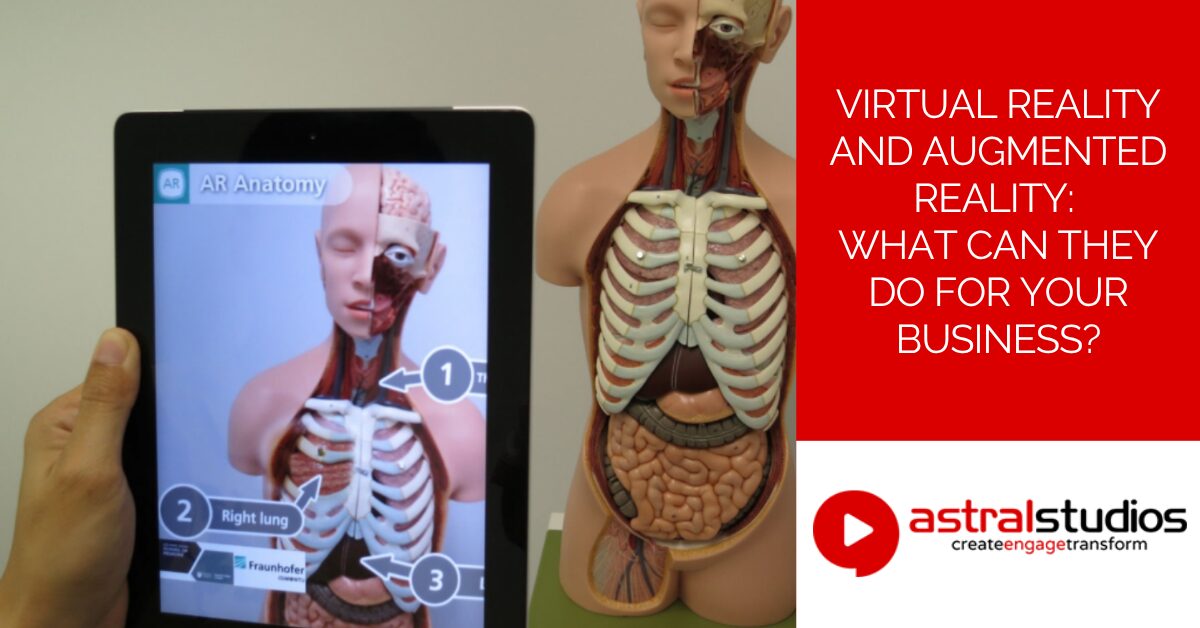
Virtual Reality and Augmented Reality: What Can They Do For Your Business?
Last Updated: 4 months ago by Astral Studios Staff
Star Trek: The Next Generation introduced the holodeck concept in the late 1980s. It captured imaginations and showed what advanced virtual reality might look like in the far future. The show built on VR ideas that were already emerging in technology research at the time.
For most people, this seems like something that belongs way into the future. The technology has developed rapidly over the last decade. Now AR and VR technologies are not only for fun and entertainment but also have serious business applications. They are beginning to revolutionize the way we work and conduct business.
3D content creation is now becoming ever more useful and practical. Augmented Reality technology helps to engage students and learners by providing a learning experience that is exciting and memorable.
AR and VR technology is virtually exploding in digital heritage sectors, including cultural, educational, and scientific applications. The technology is also making major advances in education, healthcare, and defence. There are numerous exciting opportunities for human and computer interaction. This technology is ready for mass adoption. It will redefine innovation and design industries. Marketing will be transformed. Branding faces major changes too. VR explores new boundaries in customer experience. The immersive nature of VR creates entirely new worlds. These experiences help brands connect with customers differently.
BMW building all-new US$116m Driving Simulation Centre in Munich
Microsoft HoloLens
Oculus
Augmented Reality overlays digital images over the real world. Virtual Reality completely immerses you in a digital world.
Augmented Reality (AR) refers to technology that displays digital information on top of real world items. This includes videos, photos, links, and games viewed through smartphones, tablets, or wearable devices.
Augmented Reality can bring all your physical materials, packaging and even your products to life. AR unlocks digital content and provides a whole new channel to communicate with your customers.
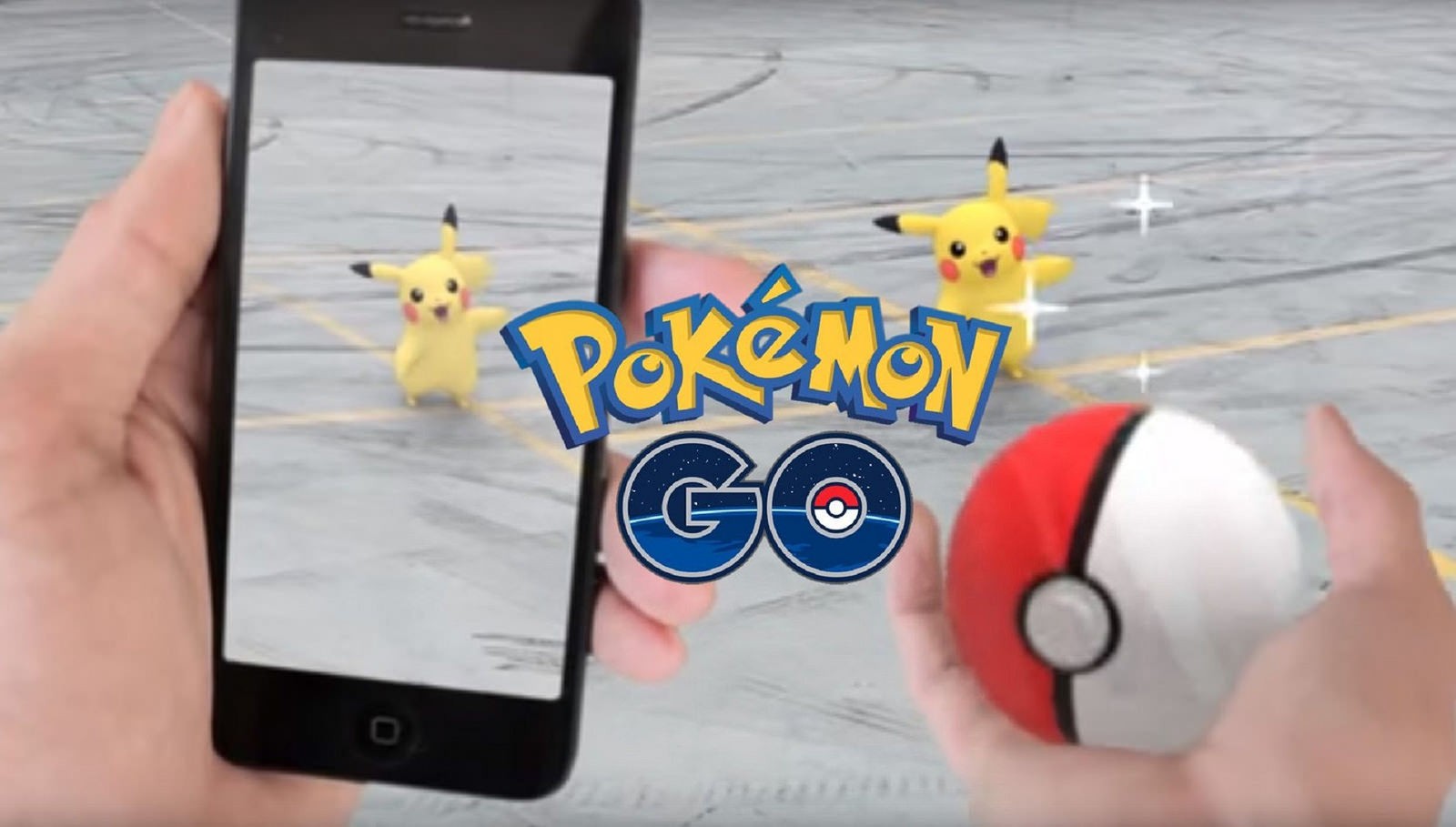
Pokémon Go popularised AR:
Pokémon Go is an augmented reality mobile game by Niantic. It’s available for iOS and Android devices. The game uses GPS to locate virtual creatures called Pokémon. These creatures appear in the player’s real-world location. Players can capture, battle, and train them.
Star Chart
Using Google Maps this tool provides an exciting way to browse and explore the universe. You can find the positions of the planets and constellations on the sky. You can even watch the birth of distant galaxies as seen by the Hubble Space Telescope.
Google Translate
Optical Character Recognition (OCR) tool in your hand. Here are the steps to use Google Translate app as an OCR.
SnapChat World Lenses
Advertisers can create their own branded versions of Snapchat’s 3D World Lenses. These allow people to augment videos shot with their phones’ rear-facing cameras with animated three-dimensional objects.
The Market Size
Facebook is the largest single investor in VR/AR after buying Oculus for $2 billion and investing at least $500 million more.
Microsoft’s Satya Nadella focused HoloLens AR/mixed reality on the Enterprise market because of its high spec and price. Going mass consumer doesn’t look likely in coming years.
After its misadventures with Glass, Google is doing the Googliest thing possible for VR/AR — everything. For VR “Explorers,” Cardboard is a low-risk entry point for VR. Daydream View could become the mobile VR leader (whether made by Google or others). Google’s approach with Tango (both in-house and with hardware partners) is at the forefront of the impending mobile AR revolution.
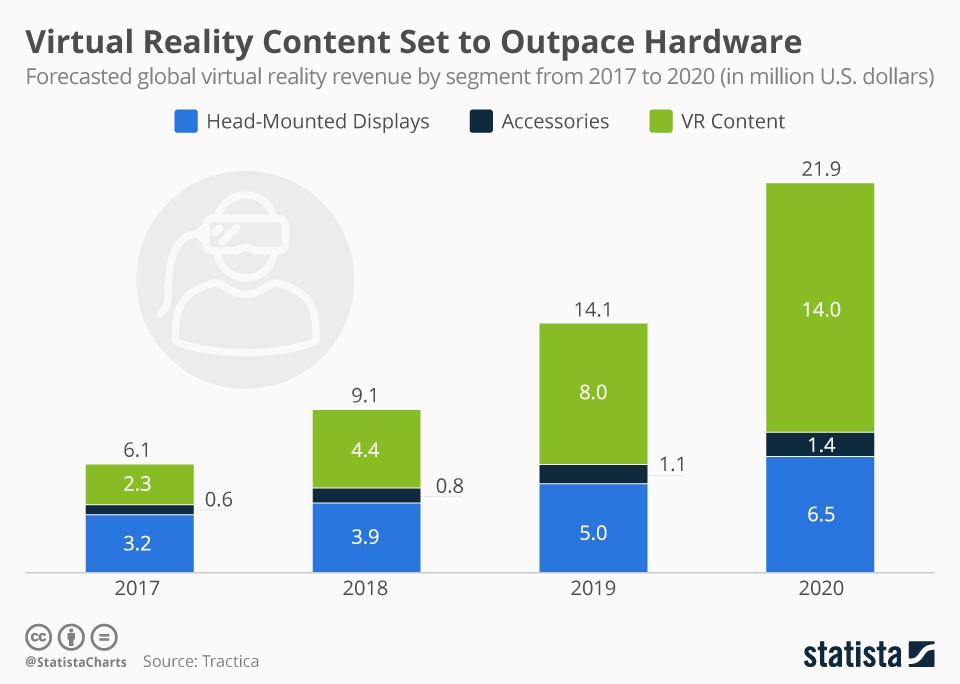
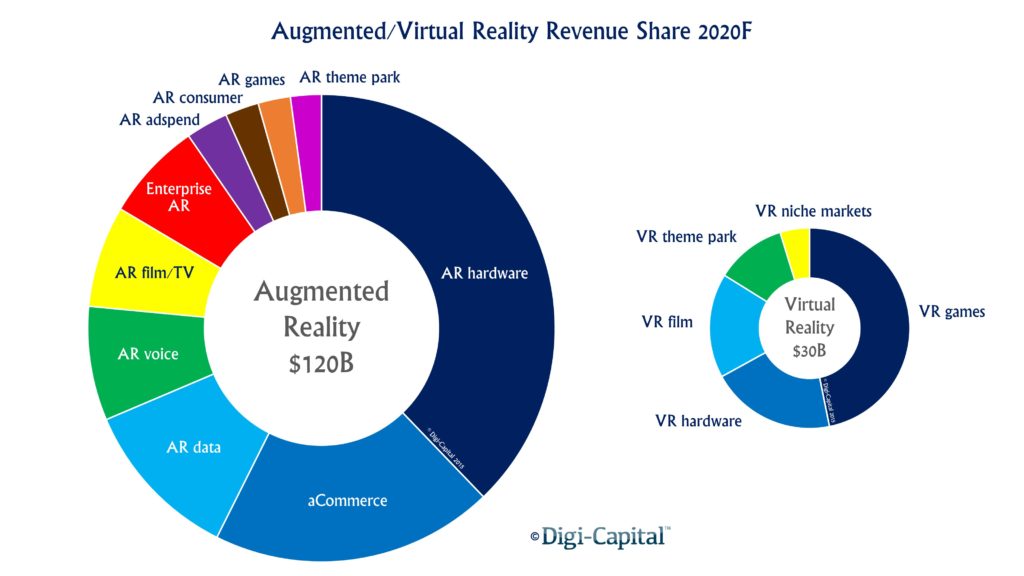
Augmented/Virtual Reality Revenue Forecast Revised To Hit $120 Billion By 2020
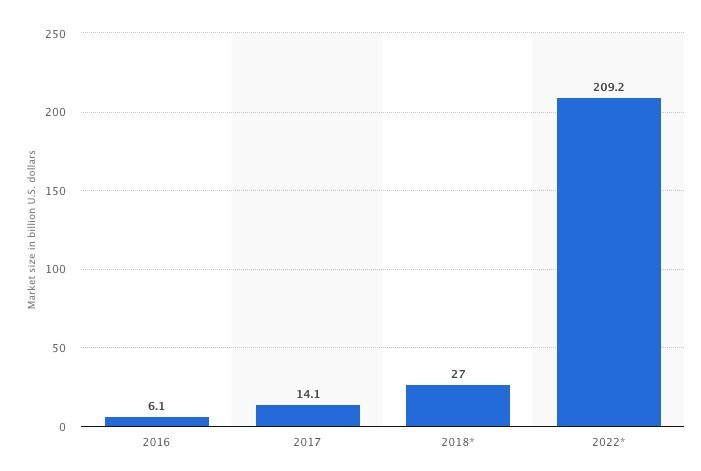
Forecast augmented (AR) and virtual reality (VR) market size worldwide from 2016 to 2022 (in billions $)
How it will shape our future:
Imagine a virtual workspace that immerses the user in a 3D desktop customized to provide the ideal working environment.
Popular use cases of augmented reality in the business world
Manufacturing
In some industries, like the manufacturing industry, it’s extremely expensive to deal with the consequences of mistakes in the development process. A small error can result in the need to stop production to rework or improve the product. which is both time consuming and costly.
Augmented Reality provides the solution to this problem. Creating a 3D model of the product prototype and using AR allows the team to access and understand the product. It becomes easier for the business leaders to make the right decisions, which lets the production team work more effectively. The efficiency and speed of the process is improved, which enhances the prototyping experience and increases profits.
Education
AR technology is making a difference in the education business vertical in two ways – by engaging users and by making the concepts interactive.
By incorporating gaming elements into the classroom, AR is providing an exceptional experience for both the teachers and students. It is encouraging them to turn a boring class into a jaw-dropping experience and learn complicated concepts easily via 3D AR modeling. It is empowering them to learn beyond the textbook material and satisfy their curiosity. Besides, it is enabling the tutors and teachers provide the right environment to the students so that they can give their best output. For example, by turning a classroom into an Augmented reality playground or high-definition gym, a physical education instructor can easily prompt students to practice actively.
Healthcare
Just like AI, Machine learning, and Wearable, the AR technology is also disrupting the world of healthcare. The technology is breaking down the complex medical concepts into interactive 3D forms. This way, it is empowering the medical experts to describe everything easily to their patients and trainees. Besides, Augmented Reality will offer 3D visualizations of the organs from the different angles. This will help the surgeons make precise stitches and increase the success ratio.
Marketing
AR is adding life to the static marketing mediums. It enables marketers to include 3D animations, video and target-based additional information into their AR-based storefronts, brochures, posters, t-shirts, flyers, and billboards. This way, it provides a lucrative and seamless experience to the targeted audience.
Fashion
Augmented Reality is transforming the fashion and retail industry in multifold. It is providing personalized assistance to the online and offline shoppers and helping them choose the right product comfortably and easily.
One of the finest examples of its application is American Apparel. This California- based clothing retailer company let the users scan any product and perform various functionalities, like checking the available sizes, changing the color, viewing reviews, and so on. To see how it actually works, check out the following video:
Travel
From hotel room booking to transportation, planning events and outings, and booking a table at a restaurant, augmented reality is helping in everything to make your traveling hassle-free and memorable. The technology is helping the travelers access the information written in pamphlets and other sources easily by converting it into useful, spoken conversation. It is offering 360-degree tours to the guest rooms, restaurants, meeting facilities, and other places to the customers. Besides, the technology is empowering the travelers to visit the nearby events and outing places even without leaving the comfort of their rooms.
Using a GPS along with traveling to a newer place is often troublesome – leading to accidents more often. To tackle this situation, ARy has come up with smart glasses. These glasses have sensors which enable the driver to keep a track of the route they take without looking around.
This way, these glasses are enhancing the experience of the person on wheels and making the automobile sector smarter.
Retail
AR technology has grown beyond the Snapchat’s virtual face filters. The technology is widely adopted in Eyewear and cosmetics industry for helping customers understand what they want, and try everything before buying.
Since every face and skin is different, it was quite difficult to deliver exquisite customer experience earlier. However, with the advent of AR technology, the end users can easily find out what suits them and make the purchase. A successful example of this kind of application is Sephora’s updated app. The mobile application has a ‘virtual try-on’ feature that enables the customers to try make-up virtually and find what goes with your complexion. Likewise, the Eyewear firm Glasses.com has incorporated the technology into their processing to make it easier for the end users to try a different style of glasses and choose the one they find great.
Food and beverage industry
Augmented Reality is bridging the gap between the consumer, product and the product content. The technology is making it easier for the end users to get a detailed information of the ingredients and nutritional value of every food item they have ordered. It is presenting the dish recipes in innovative ways, which is encouraging the chefs to experiment and enhance their skills.
Apart from this, the technology is playing a significant role in the customer marketing. For example, the AR-based Patron campaign empowered the iOS users to get access to the AR experience of drinking different kinds of tequila while a mini-bartender explains about the taste of each.
Enterprise
AR has enhanced the working of enterprises by providing them numerous benefits. By creating an AR projection of the person on call at the other end, the technology is making users feel as if they are talking directly. This way, it is improving the engagement and productivity of the process. Besides, the technology is playing a crucial role in scanning and gathering all the online information about an individual so as to verify his background before getting into a deal.
Although the potential of Augmented Reality is not yet unleashed completely, the technology is setting the beginning of a new era in the business world. It is improving the way brands interact with the customers and acting as the right tool to boost customer engagement. The adoption of the AR technology is growing so rapidly that its market is expected to cross $117.4 billion by the year 2022, which clearly indicates investing in AR app development is the need of the hour.

