


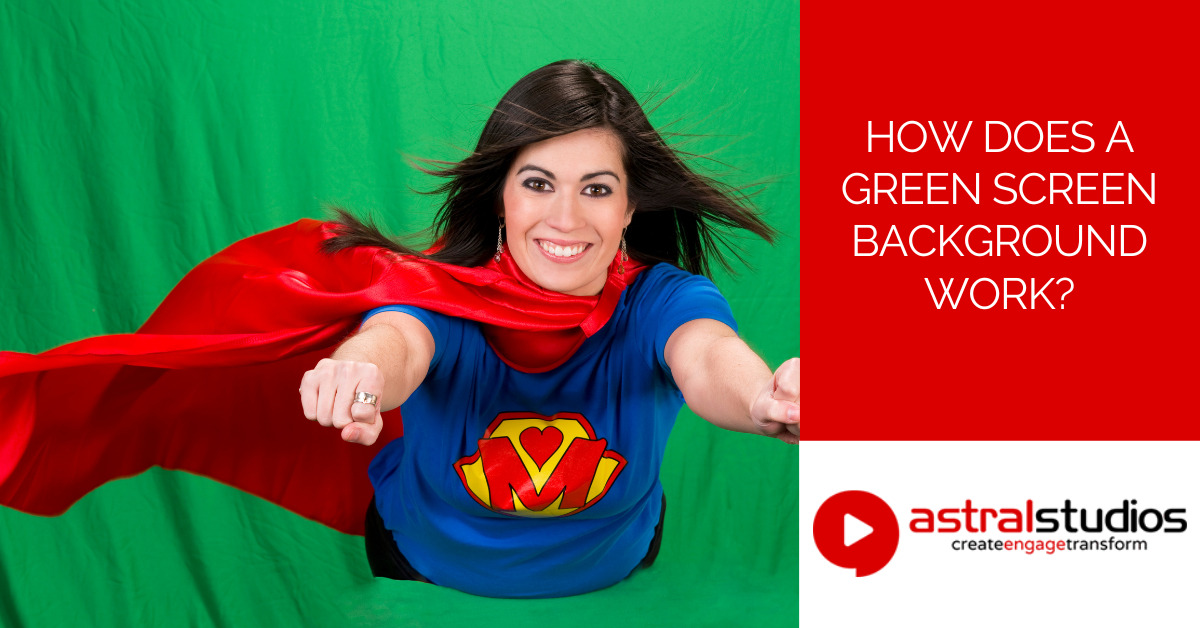
How Does a Green Screen Background Work?
Last Updated: 2 years ago by Astral Studios Staff
In today’s digital age, you’ve probably seen eye-catching effects in movies, weather reports, and even video calls that make people appear as if they’re in exotic locations or outer space. The use of a green screen background makes these captivating illusions possible. People also call this technology chroma keying. In this article, we’ll delve into the fascinating world of green screen backgrounds and uncover the science behind their mesmerizing magic.
What is a Green Screen?
A green screen is essentially a bright green backdrop. Video makers and photographers use these screens in various visual media applications. The name is pretty self-explanatory – it’s a screen that’s green. But why green, you might wonder?
Well, the choice of green isn’t random. It’s because green is a colour that rarely appears in clothing and doesn’t often match skin tones. This makes it easier to separate the subject from the background when editing.
For instance, think of a weather forecaster on TV. They stand in front of a green screen, and you see weather maps and graphics behind them. The green screen allows them to superimpose those visuals without affecting the person in front. So, when they point at the screen, it looks like they’re interacting with the weather graphics.
Filmmakers, too, use green screen backgrounds extensively. Consider movies with epic battles in distant lands or superheroes flying through the sky. The production teams often film these scenes in a studio with actors performing in front of a green screen backdrop. Later, through the magic of post-production, the team replaces the green background with fantasy worlds or any other setting the creators desire.
Now that we understand what a green screen bg is and why it’s green, let’s dive into the intriguing science behind how it all works.
The Science Behind It
The mesmerising magic of green screens lies in the clever manipulation of colours and pixels, all made possible by the wonders of modern technology.
Cameras and Software: The key to green screen technology lies in the ability of cameras and software to distinguish the bright green backdrop from the subject in the foreground. This differentiation allows for the seamless removal of the green background and the introduction of new visuals or backgrounds.
RGB Color Model: To understand this process, we must acquaint ourselves with the RGB colour model. The primary colours for light (additive primary colours) are red, green, and blue (RGB). When you combine these colours of light in varying intensities, they create a full spectrum of colours. In additive colour mixing, combining all three primary colours at full intensity produces white light.
With green screens, the technology uses the bright green colour to replace in post-production.
Imagine an actor positioned in front of a green screen, while not wearing any green clothing. The camera records this scene, separating the bright green backdrop from the actor. The software recognizes the green colour, rendering it transparent, and thus, it enables the desired background, such as a tropical beach, to appear seamlessly.
This clever manipulation of colours enables filmmakers, weather presenters, and content creators to transport their subjects to virtually any location or setting, all from the comfort of a controlled environment.
But the story doesn’t end with the technology alone. Lighting plays a crucial role in achieving a convincing green screen effect, as we’ll explore in the next section.
Lighting Matters
Achieving a convincing green screen effect isn’t solely about having the right technology; it’s also about mastering the art of lighting.
Even Lighting: The first rule of thumb is to ensure even lighting on the green screen backdrop. Irregular lighting can cause shadows or variations in green hues, making it challenging to isolate the subject from the background. To avoid this, professionals use multiple lights to create a uniform, well-lit green background.
Shadows and Reflections: Shadows and reflections can be the nemesis of green screen enthusiasts. If the subject casts a shadow on the green screen bg, the software may have difficulty distinguishing between the subject and the backdrop. Similarly, reflective objects or shiny surfaces can bounce green light onto the subject, causing what’s known as “green spill.” This can lead to a less-than-perfect final result.
Imagine a movie scene where the actor is standing in front of a green screen, simulating a moonlit night. Incorrectly managed lighting may cast shadows on the green screen, making it challenging to replace the background with a moonlit landscape.
By carefully controlling lighting conditions, professionals can create a seamless green screen effect, ensuring that the subject appears as though they belong in the chosen background.
In the next section, we’ll delve into the nuts and bolts of how the magic happens, from the actual process of replacing the green screen to tips for achieving the perfect effect.
Making the Magic Happen
Now that we’ve uncovered the science behind green screens and appreciated the importance of proper lighting, let’s explore the actual process of making the magic happen.
Keying Process:
The heart of green screen technology lies in the keying process. This is where we systematically remove the green background and replace it with another image or video, often called the “background plate.” We use powerful software like Adobe After Effects or Final Cut Pro for this task.
Imagine a vlogger recording a video in their living room. With the green screen technology, they can change their background to a tropical paradise or a bustling cityscape during the editing process. The keying process is what makes this transformation possible.
Chroma Keying Software:
Chroma keying software recognizes the specific shade of green used in the background and makes it transparent. This process is known as “keying out” the green. The software identifies all the pixels that match the designated green colour and makes them see-through, allowing the chosen background to show through.
Think of it as digital scissors that carefully cut out the green backdrop, leaving the subject intact. The more precise the keying, the more convincing the final result.
Hardware Solutions:
While software plays a pivotal role, there are also hardware solutions like green screen kits that include the backdrop, lighting, and sometimes even a camera. These kits provide an all-in-one solution for content creators looking to achieve professional-quality green screen effects.
In essence, green screen technology relies on the perfect marriage of hardware and software, enabling content creators to transport their subjects to virtually any location, era, or fantasy realm, all within the confines of a studio or even a spare room.
But, as with any creative endeavor, there are tricks and techniques to master. In the next section, we’ll share some valuable tips to help you achieve a perfect green screen effect for your own projects.
Tips for a Perfect Green Screen Effect
Creating a perfect green screen effect isn’t just about having the right equipment; it also involves some tried-and-true techniques. Here are some invaluable tips to help you achieve that flawless green screen magic:
1. Choose the Right Shade of Green:
Ensure that the shade of green you use is neither too dark nor too light. A vibrant, mid-tone green typically works best for chroma keying.
2. Pay Attention to Clothing:
Avoid wearing clothing that matches the green screen background. If you do, parts of your body might appear transparent in the final result.
3. Distance Matters:
Stand a sufficient distance from the green screen to prevent any shadows or green spill. This distance varies depending on your setup, but a general guideline is to be at least six to eight feet away.
4. Proper Lighting:
Invest in good-quality lighting equipment to ensure even illumination on the green screen background. You can minimize harsh shadows with soft, diffused lighting.
5. Control the Environment:
Eliminate any reflective surfaces or objects in the vicinity of the green screen, as they can introduce unwanted green spill.
6. Watch Your Movements:
Avoid making sudden or exaggerated movements in front of the green screen, as this can disrupt the keying process.
7. Use High-Resolution Footage:
When selecting your background, use high-resolution images or videos to maintain the overall quality of your project.
8. Test and Adjust:
Don’t hesitate to do test shots and make adjustments as needed. Tweaking the lighting, camera settings, or even the green screen itself can significantly improve your results.
Remember, practice makes perfect. The more you experiment with green screen backdrops, the better you’ll become at creating captivating visuals that transport your audience to different worlds and scenarios.
In the next section, we’ll explore the wide-ranging applications of green screens, extending beyond the realm of movies and videos.
Beyond the Movies
Green screens are not confined to the glitz and glamour of Hollywood. They have found their way into various aspects of our daily lives and entertainment. Here’s a glimpse of the versatile applications of green screen technology:
1. Weather Reports: Turn on your television, and you’re likely to see meteorologists standing in front of green screens, presenting weather forecasts with vibrant maps and graphics behind them. It’s all thanks to green screen technology that weather reports have become more engaging and informative.
2. Video Games: The gaming industry has embraced green screen backdrops to enhance the streaming experience. Gamers can overlay themselves onto the gameplay, creating immersive and interactive live streams for their audiences.
3. Virtual Events: In the era of virtual meetings and events, green screens have become indispensable. They allow presenters and speakers to appear in various settings, adding a touch of professionalism and excitement to online conferences, webinars, and virtual trade shows.
4. Educational Content: Educators and content creators use green screens to transport students to historical events, far-off places, or even the microscopic world. It’s a captivating way to make learning more engaging and visually appealing.
5. Special Effects for YouTube and Social Media: Content creators on platforms like YouTube and TikTok leverage green screens to add visual flair to their videos. From hilarious backgrounds to mind-bending illusions, green screens offer endless creative possibilities.
6. Live Broadcasts: Live TV shows, such as talent competitions, use green screens to create spectacular visual effects on the fly. Contestants perform on a green screen stage, and the background changes dynamically to match their act.
As you can see, green screen technology has transcended the boundaries of traditional filmmaking, infiltrating our daily lives, entertainment, and education. Its versatility continues to captivate audiences and expand creative horizons.
Green Screen FAQ
Welcome to our Green Screen FAQ, where we answer common questions about green screens and chroma keying in a simple and easy-to-understand manner.
What is a green screen?
A green screen is a bright green backdrop used in visual media production. It’s often used to replace the background with different images or videos during post-production.
Why is green the preferred color for a green screen?
Green is commonly used because it’s a colour that rarely appears in clothing and doesn’t often match skin tones. This makes it easier to separate the subject from the background during editing.
How does a green screen work?
Green screens work by using cameras and software to distinguish the green background from the subject in the foreground. This allows the green background to be replaced with another image or video.
What is the keying process?
The keying process is where the green background is removed, making it transparent, and replaced with a different image or video. This is done using chroma keying software.
How important is proper lighting for a green screen effect?
Proper lighting is crucial for a convincing green screen effect. It helps to ensure even lighting on the green screen and avoids shadows or green spill, which can make the keying process challenging.
Can I use a blue screen instead of a green screen?
Yes, blue screens are also used in chroma keying. The choice between green and blue depends on factors like the subject’s clothing and the desired background.
What are some tips for achieving a perfect green screen effect?
- Choose the right shade of green.
- Pay attention to clothing to avoid color clashes.
- Maintain an adequate distance from the green screen.
- Use proper lighting to achieve even illumination.
- Eliminate reflective objects and surfaces.
- Minimize sudden or exaggerated movements in front of the screen.
- Use high-resolution background images or videos.
- Do test shots and make adjustments as needed.
Where are green screens used besides movies?
Green screens are used in weather reports, video games, virtual events, educational content, social media videos, and live broadcasts, among other applications. They offer versatility and creativity in various industries.
How can I get started with green screen technology?
To get started with green screen technology, you’ll need a green screen backdrop, good lighting, a camera, and chroma keying software. There are also green screen kits available that include all the necessary equipment.
Is green screen technology difficult to master?
While it may take some practice to achieve perfection, green screen technology is accessible to beginners. With the right equipment, lighting, and software, you can create impressive effects and improve your skills over time.
Conclusion
In conclusion, the captivating world of green screens or chroma keying relies on the synergy of technology, lighting, and creative ingenuity. By understanding the science behind it, mastering the art of lighting, and applying practical tips, you can achieve flawless green screen effects for your projects. Whether you’re making movies, giving weather forecasts, or simply adding a touch of magic to your online presence, green screens open doors to boundless creativity and endless possibilities. Embrace the green screen, and let your imagination take flight.
Transform Your Vision into Reality with Astral Studios! Since 1991, we’ve been the driving force behind Johannesburg’s animation and video production agency. Whether you need captivating Animated Explainer Videos, cutting-edge 3D animation, or professional corporate communication services, we’ve got you covered. With our extensive experience and commitment to excellence, we’ll bring your ideas to life. Contact us today and experience the magic of Astral Studios!

