


How Much Does A Virtual Event Cost In South Africa?
Last Updated: 4 months ago by Astral Studios Staff
Virtual event cost is probably the first thing that comes up when you’re planning an online conference or webinar in South Africa. This article breaks down what you’ll actually pay – and why the range is so wide.
A few months ago, someone from a large Johannesburg-based NGO shared a story that stuck. Their comms team had budgeted R8,000 for a virtual conference. They had 400 registrants, three senior speakers, and a government minister lined up as the keynote. They used a free Zoom account, someone’s laptop, and a home Wi-Fi connection. The stream dropped twice. The minister’s audio cut out mid-sentence. By the end, half the attendees had logged off. The event never got a second chance to make that impression.
That story isn’t unique. It plays out regularly across South Africa’s corporate and government sectors, and it always comes down to the same misunderstanding: a virtual event is not just a Zoom call with more people on it.
So let’s talk about what it actually costs to do this properly.
What Kind of Virtual Event Are You Hosting?
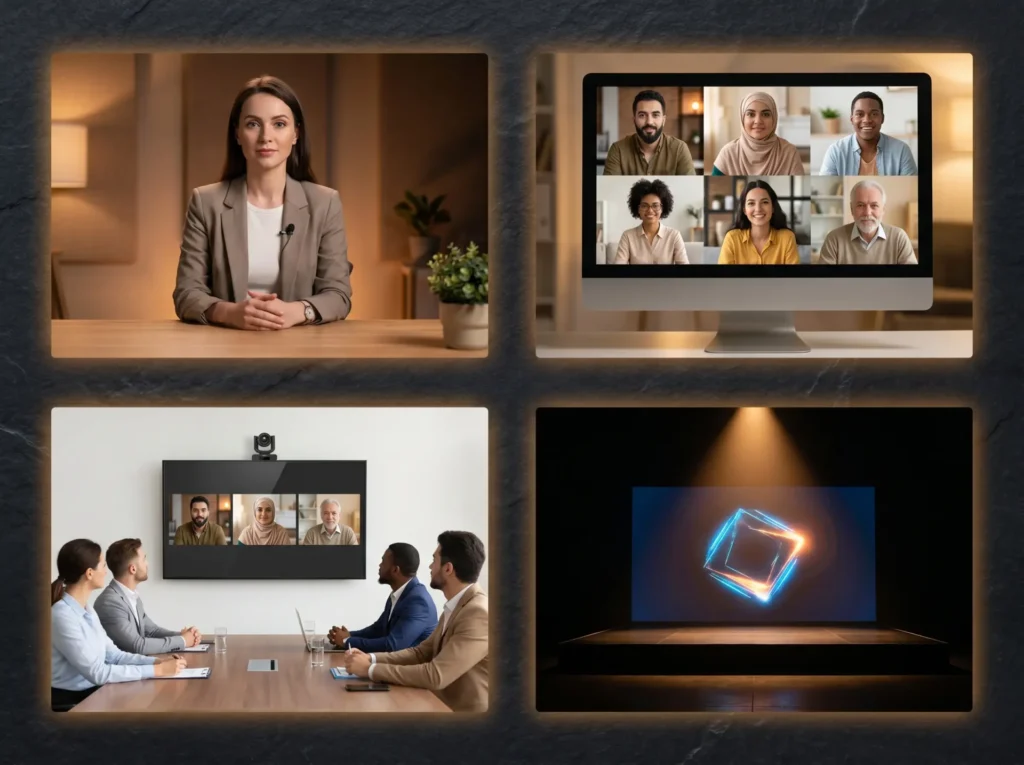
Before you can put a number on virtual event cost, you need to know what kind of event you’re talking about. The term covers a wide range of formats, and each one has different requirements.
A webinar is the simplest format. One or a few presenters, a mostly one-way broadcast, typically under a few hundred attendees. Companies use these for product demos, training sessions, and lead generation.
A virtual conference is more involved. Multiple sessions, breakout rooms, different speakers, networking features, and a larger audience. Think of it as a physical conference that runs entirely online.
Then there’s a virtual product launch or press event. These are broadcast-quality productions with a lot of pre-production work behind them. They’re brand-forward and usually combine pre-recorded and live elements.
Virtual AGMs and town halls sit in their own category. They’re often internally focused, compliance-driven, and need reliable recording, access control, and a clear audit trail.
Hybrid events – where you have a live in-person audience and a simultaneous virtual audience – cost more, and we’ll get to those separately.
Each format has different platform, production, and crew requirements. Getting clarity on the format early saves a lot of budget surprises later.
The Building Blocks of Virtual Event Cost
Most virtual event budgets come down to some combination of the following components. Not every event needs all of them. But it helps to know what each one costs before you start cutting.
| Cost Component | What It Covers | SA Cost Range (2026) |
|---|---|---|
| Streaming platform / software | Zoom, Teams, RingCentral Events, vFairs, etc. | R0 (existing licence) – R80,000+ |
| Production crew | Camera operators, director, audio engineer, switcher | R8,000 – R80,000+ per day |
| Studio or filming location | Green screen studio, set design, venue hire | R3,000 – R50,000 |
| Motion graphics and visual design | Branded overlays, lower thirds, opening/closing animations | R5,000 – R40,000 |
| Technical support on the day | Dedicated operator, backup systems, stream monitoring | R2,000 – R15,000 |
| Speaker support | Presenter kits, rehearsals, green room setup | R1,500 – R20,000 |
| Post-event editing | Recording clean-up, repurposing into clips, on-demand content | R5,000 – R40,000+ |
| Marketing and promotion | Email, social media, registration platform | R3,000 – R30,000 |
| Contingency buffer (5–15%) | Backup equipment, last-minute changes | Varies |
One thing most SA planners miss: most international virtual event platforms price in US dollars. At around R16.50 to the dollar in 2026, a platform that looks like a modest $99 per month is actually R1,635. An enterprise plan at $3,000 per event is close to R50,000. Factor this in early, before you commit to a platform.
What Your Budget Actually Buys: Three Tiers
Entry Level: R5,000 to R25,000
At this level, you’re most likely using a Zoom or Microsoft Teams licence your organisation already pays for. One presenter, a slide deck, minimal crew, no custom graphics. This works for internal town halls, small training sessions, or quick stakeholder briefings.
The limitation is real, though. It looks exactly like what it is. For a low-stakes internal event, that’s fine. For anything client-facing, government-to-public, or brand-critical, you’re leaving a lot on the table.
Mid-Range: R25,000 to R150,000
This is where most serious SA corporate and government events should sit. You get a professional streaming platform, a small production crew, branded motion graphics, a clean studio or dressed location, and dedicated technical support on the day.
This tier is where visual storytelling starts to earn its money. A branded opening animation, professional lower thirds on each speaker, smooth transitions, and a well-lit set tell your audience something important: this event was prepared for them. That perception directly affects how they engage with the content and how they remember the brand or department behind it.
For context: a government department that recently held a virtual policy communication event in this budget range saw attendee retention through the full session improve compared to their previous unproduced webinar. The production quality kept people watching.
Broadcast-Quality: R150,000 to R500,000+
At this level, you’re talking about a custom-built virtual event environment, multi-camera production with live switching, broadcast-quality audio, full pre-production, and a post-event on-demand video library. Large annual conferences, major product launches, government public engagement campaigns, and IGO events typically fall here.
The investment at this level is really an investment in content. A well-produced event at this tier generates material you can use for months: social clips, internal training assets, thought leadership content, and on-demand replays that keep working long after the event date.
Why Production Quality Changes the Game
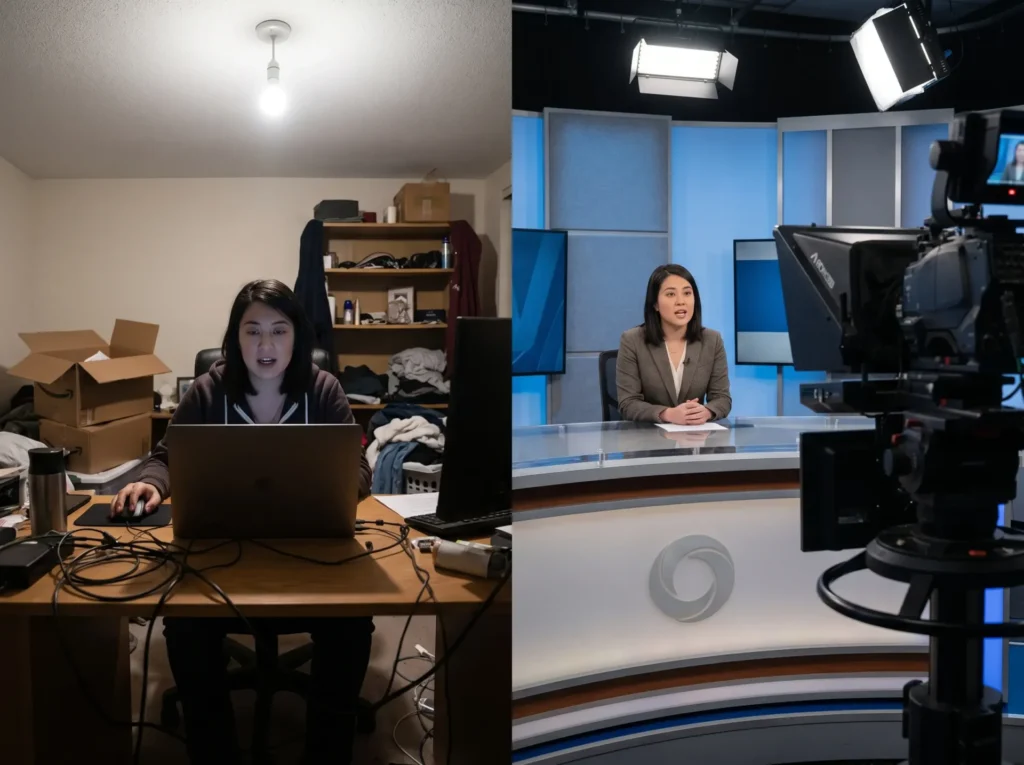
There’s a reason broadcast television looks the way it does. Poor audio and shaky video create friction. Your brain registers something is wrong, and attention starts to slip. For an in-person event, the social pressure of being in the room keeps people seated. Online, a single click takes your audience somewhere else.
Professional virtual event production removes that friction. A presenter recorded in a proper studio with controlled lighting, clean audio, and a polished backdrop looks authoritative. The content lands better because nothing is pulling the viewer’s attention away from it.
Visual storytelling elements do specific work here. An opening video sets the tone before the first speaker appears. Branded lower thirds tell the audience who they’re listening to and why that person’s title matters. Animated transitions signal that one section has ended and another has begun. Sponsor graphics show partners they got value. None of this is decoration. All of it serves the audience experience.
Pre-recorded sessions are worth mentioning separately. When done well in a professional studio, they actually look better than most live setups. You can edit out stumbles, tighten the pacing, and colour-grade the footage so every session looks consistent. For a multi-speaker event where presenters are in different locations, pre-recording is also a major risk management tool.
Then there’s the repurposing argument, and it’s a strong one. A professionally produced virtual event is also a content production day. One event can generate a dozen social media clips, a highlight reel for the website, individual session recordings for on-demand access, and training materials for internal use. A DIY Zoom recording usually generates a file that nobody watches.
Hybrid Events: A Different Budget Conversation
Hybrid events cost more than virtual-only events. That’s not a preference – it’s just the reality of what you’re building.
A hybrid event runs a live venue and a virtual broadcast at the same time. You need professional cameras, audio feeds that work for both the physical room and the online stream, live switching, streaming encoders, and staff managing both audiences simultaneously. The online audience is often the afterthought in poorly planned hybrid events, and it shows. Virtual attendees who feel like second-class participants log off early.
South African event production rates from local suppliers give you a sense of the physical side: sound systems run R10,000–R80,000, LED screens R12,000–R500,000, depending on scale. Add that to your virtual production budget and you can see how quickly a hybrid event climbs.
For a well-produced hybrid event in South Africa, budget for your virtual-only cost plus at least R100,000–R200,000 more for the physical production and hybrid coordination. The upside is reach. A Joburg conference that would have pulled 200 people in-person can reach thousands virtually – and that audience value is real.
South Africa-Specific Factors
Platform Costs in Rands
The rand/dollar gap is a genuine budget factor. RingCentral Events (formerly Hopin) starts at around $83 per month – about R1,370 at current rates. Enterprise plans run significantly higher. vFairs, Bizzabo, and similar full-featured platforms price by attendee count and features, with annual contracts often reaching tens of thousands of rands before production costs are added. If your organisation already has Microsoft Teams, it’s worth checking whether Teams Live Events covers your requirements before committing to a new platform.
Connectivity and Bandwidth
South Africa’s Internet infrastructure has improved. Fibre penetration in urban centres is strong. That said, connectivity is not uniform, and a virtual event is only as good as the connection it runs on. For a professionally produced event, the production setup should run on a dedicated fibre line, not shared venue Wi-Fi. A backup LTE or 5G connection is sensible. Any production company worth working with handles this as standard.
Power Reliability
Load shedding is no longer the crisis it was in 2022–2024. South Africa has had extended periods of stable supply. However, Eskom’s own Medium-Term System Adequacy Outlook points to potential supply risks returning by 2029 as the energy transition continues. For any produced event, a UPS or generator is not optional – it’s standard kit. Good production companies carry backup power as part of their setup.
Multilingual Requirements
South Africa has 11 official languages. For government departments, NGOs, or large public-facing corporate events, real-time interpretation or multilingual subtitling is often non-negotiable. Live interpretation through a dedicated platform adds R5,000–R30,000+ depending on language pairs and session length. Captioning services start lower. Budget for this early – it’s one of the line items that surprises people.
Local Production Rates
South African production rates compare well to international benchmarks. A professional video production day locally – single 4K camera, lighting package, audio – starts from around R5,500, going to R25,000 or more for full multi-camera setups with a complete crew. That’s a fraction of equivalent UK or US rates, which means SA organisations producing for local audiences get strong production quality at a genuinely competitive price point. You can see how this stacks up against general video production costs in South Africa.
Is a Virtual Event Cheaper Than an In-Person Event?
Generally, yes. But not nearly as cheap as many people assume.
What you save: venue hire, catering, travel, accommodation, printed materials. These are real savings, and they can be substantial for a national event drawing delegates from multiple cities.
What you still pay for: platform, production crew, content design, technical support, marketing, speaker preparation, and post-event editing. Those costs don’t disappear just because the event is online.
The “free Zoom call” assumption doesn’t survive contact with a serious event budget. A professionally produced virtual conference for 500 or more external attendees in South Africa should realistically carry a budget of R80,000–R250,000 once all components are included.
The ROI case is where virtual events pull ahead of in-person equivalents over time. A well-produced recording with proper post-production generates months of content value. On-demand replays, social clips, thought leadership pieces, and training materials all come from a single production day. A venue-hired in-person conference, by contrast, is largely gone when the last delegate leaves.
Before You Set Your Budget: Questions to Ask
These questions help you arrive at a realistic budget before you approach any supplier.
- How many attendees do you expect, and are they internal or external? External-facing events need higher production standards.
- Is this a once-off or a recurring event? A recurring event may justify a longer-term platform contract rather than a per-event fee.
- Do you need live interaction – Q&A, polls, networking – or is a broadcast format fine? Live interaction requires more robust platforms and technical support.
- Will sessions be live, pre-recorded, or a mix? Pre-recording offers quality control; live sessions carry more risk.
- Do you have an existing platform licence you can use? This is the first thing to check before spending on a new platform.
- How will you measure success? Registrations, attendance rate, session completion, post-event views – define this before you design the event.
- Will you repurpose the content afterwards? If yes, that changes how you approach production and what crew and equipment you need.
- What’s your contingency plan for technical failures on the day? Always build a 10–15% contingency into your budget.
Frequently Asked Questions
How much does a basic webinar cost in South Africa?
A basic webinar using an existing Zoom or Teams licence with no custom production can cost very little in platform fees. Add professional lighting, audio, and branded graphics and you’re looking at R15,000–R40,000 as a starting point.
What’s the difference between a webinar and a virtual event?
A webinar is mostly a one-way or limited-interaction broadcast. A virtual event covers multi-session conferences, virtual expos, and networking events – usually with a dedicated platform and more interactivity.
Does a hybrid event cost more than a virtual event?
Yes, consistently. You’re running a live production and a virtual broadcast at the same time. Budget for your virtual-only cost plus at least R100,000 – R200,000 more for the physical production side.
Can I repurpose a virtual event recording?
Yes – and this is one of the strongest arguments for investing in production quality. A well-recorded virtual event generates on-demand replays, social clips, training content, and marketing material for months. Poor recording quality limits what you can do with it.
Do I need a production company, or can I do it myself?
For low-stakes internal events, a DIY setup is fine. For client-facing events, government communications, or anything with a significant external audience, professional production pays for itself in audience perception and content quality.
Get an Accurate Quote for Your Virtual Event
Virtual event costs in South Africa range from a few thousand rand to half a million, depending on format, scale, and production quality. The budget question is really a quality question. And quality – professional visuals, reliable streaming, and content that keeps working long after the event – is what separates a virtual event people remember from one they close the tab on.
Contact us to discuss your virtual event requirements and get a quote tailored to your organisation’s needs.
Glossary of Technical Terms
Branded overlays – Graphic elements placed over video content, such as logos, lower thirds, and background designs that reinforce brand identity throughout a broadcast.
Contingency buffer – A percentage of the total budget (typically 5–15%) set aside to cover unexpected costs or last-minute changes.
Green screen studio – A filming environment where a solid green background is replaced in post-production with any image or set design, allowing presenters to appear in custom visual environments.
Hybrid event – An event that combines a live in-person audience with a simultaneous virtual audience accessing the content online.
Lower thirds – On-screen text graphics, usually placed in the lower portion of the frame, that identify speakers by name and title.
Motion graphics – Animated visual elements such as transitions, intro sequences, and animated logos used to give video content a polished, branded look.
On-demand video – Recorded event content made available for audiences to watch after the live event has ended, at a time of their choosing.
Pre-recorded sessions – Presenter recordings captured before the live event date, edited and played back during the broadcast to ensure consistent quality.
Streaming encoder – Hardware or software that converts a video signal into a compressed digital format suitable for live broadcasting over the Internet.
UPS (Uninterruptible Power Supply) – A battery backup system that keeps equipment running for a short period during a power outage, giving time to switch to a generator.
Virtual event platform – Dedicated software used to host online events, providing features such as registration, live streaming, networking, Q&A, polling, and analytics.


