


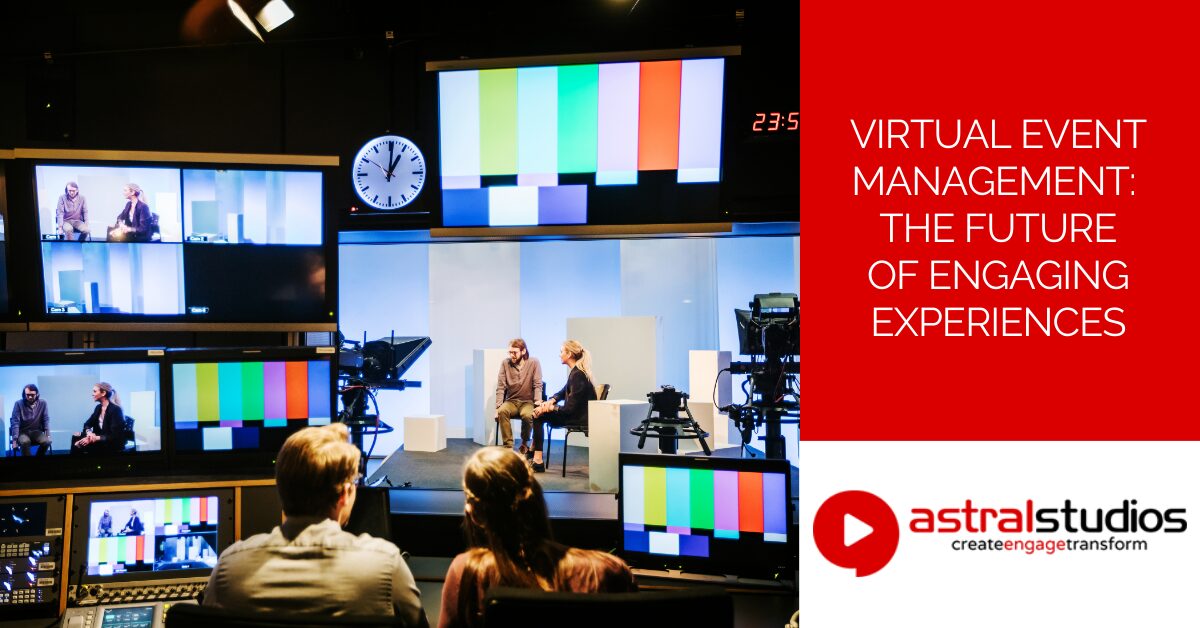
Virtual Event Management: The Future of Engaging Experiences
Last Updated: 6 months ago by Astral Studios Staff
I remember the first time we produced a virtual event. It was during the height of the pandemic. Everything had shut down, and our client’s in-person events were no longer possible. We had to pivot quickly. I recall sitting in my home office in Johannesburg, feeling a mix of anxiety and excitement. We were about to embark on a new journey into the world of virtual event management. Little did I know, this shift would open up a whole new realm of possibilities and redefine how our clients connect with their audiences.
The Basics of Virtual Event Management
Virtual event management involves planning, organizing, and executing events over the Internet. Unlike traditional events, virtual events take place in a digital space, allowing attendees to join from anywhere in the world. This offers several advantages, such as reduced costs, greater flexibility, and the ability to reach a broader audience.
One key difference between virtual and in-person events is the need for robust technical infrastructure. This includes reliable Internet connections, high-quality video production, and user-friendly platforms for hosting the event. Additionally, virtual events often require a different approach to engagement, as keeping attendees interested in a digital environment can be more challenging.
The benefits of virtual events are numerous, especially for corporates, NGOs, and government departments. These events offer cost savings on travel and venue hire, increased accessibility for attendees, and the ability to gather detailed analytics on attendee behaviour and engagement.
Choosing the Right Virtual Event Management Company
Selecting the right virtual event management company is crucial to the success of your event. Here are some key factors to consider:
- Experience and Expertise: Look for a company with a proven track record in virtual event management. They should have experience handling events similar to yours and be able to provide references or case studies.
- Technical Capabilities: Ensure the company has the technical expertise to handle all aspects of the event, from live streaming to interactive features. They should be familiar with the latest technologies and platforms.
- Creative Solutions: A good virtual event management company will offer creative solutions to make your event engaging and memorable. This includes innovative formats, interactive elements, and high-quality content creation.
Several top event management companies in Johannesburg stand out. These companies have established themselves as leaders in the field, offering comprehensive virtual event management services. Their expertise and local knowledge make them ideal partners for hosting successful events in South Africa.
Planning a Virtual Event
Planning a virtual event involves several key steps:
- Define Goals and Objectives: Understand what you want to achieve with your event. This could be educating your audience, promoting a product, or fostering networking opportunities.
- Choose the Right Platform: Select a platform that suits your event’s needs. Consider factors such as ease of use, features, and technical support.
- Create an Engaging Agenda: Plan a schedule that keeps attendees engaged. Include a mix of presentations, panels, interactive sessions, and networking opportunities.
- Promote Your Event: Use various channels to market your event, including social media, email marketing, and partnerships. Ensure you provide clear information on how to join and what to expect.
- Prepare for Technical Issues: Have a plan in place to handle any technical problems that may arise. This includes having technical support available and conducting thorough rehearsals.
Creating engaging and interactive virtual events requires a deep understanding of your audience. Use tools like polls, Q&A sessions, and breakout rooms to foster interaction. Additionally, consider incorporating elements such as live entertainment or virtual tours to add variety and keep attendees interested.
Types of Virtual Events
Virtual events come in various formats, each serving different purposes and audiences:
- Webinars: These are typically educational sessions focused on a specific topic. They involve a presenter or panel of experts sharing knowledge with an audience, often with opportunities for Q&A. Webinars are great for training sessions, product demonstrations, and thought leadership.
- Virtual Conferences: These are larger-scale events that mimic traditional conferences. They include multiple sessions, keynote speakers, and networking opportunities. Virtual conferences can span several days and often feature virtual exhibition halls where sponsors and exhibitors can showcase their offerings.
- Online Workshops and Training Sessions: These interactive sessions focus on skill development and hands-on learning. Participants can engage in activities and receive real-time feedback. Online workshops are ideal for professional development, team building, and educational purposes.
- Virtual Trade Shows and Expos: These events allow companies to showcase their products or services in a virtual exhibition hall. Attendees can visit virtual booths, watch demos, and interact with exhibitors. Virtual trade shows are effective for generating leads, launching new products, and expanding market reach.
- Hybrid Events: These combine in-person and virtual elements, allowing attendees to choose how they participate. This format offers the best of both worlds and can reach a broader audience. Hybrid events are flexible and can adapt to changing circumstances, such as travel restrictions or health concerns.
Virtual Event Logistics
Managing the logistics of a virtual event is crucial to ensuring a smooth and successful experience. Here are some key considerations:
- Technical Infrastructure: Ensure you have a reliable Internet connection and the necessary hardware and software for streaming and interaction. This includes cameras, microphones, and streaming platforms. High-quality video and audio equipment are essential to deliver a professional experience.
- Technical Support: Have a team of technical support staff available to assist with any issues that arise during the event. This can include troubleshooting connectivity problems, helping attendees navigate the platform, and resolving audio or video issues. A dedicated support team ensures that any technical hiccups are quickly addressed.
- Rehearsals and Testing: Conduct thorough rehearsals and testing before the event. This helps identify and address any potential issues, ensuring everything runs smoothly on the day. Rehearsals allow speakers to become familiar with the platform and test their equipment.
- Backup Plans: Have contingency plans in place for common technical issues. This includes backup Internet connections, spare equipment, and alternative methods for delivering content if needed. Preparing for the unexpected helps maintain the event’s professionalism and continuity.
Content Creation and Selection
High-quality content is essential for engaging virtual events. Here are some tips for creating and selecting the right content:
- Relevance and Value: Ensure your content is relevant to your audience and provides value. This could be educational, entertaining, or inspirational content that meets their needs and interests. Tailor your content to address the specific challenges and goals of your audience.
- Engaging Formats: Use a variety of formats to keep your audience engaged. This can include presentations, panel discussions, interviews, live demos, and interactive sessions. Mixing up the formats prevents monotony and keeps attendees interested.
- High-Quality Production: Invest in professional production to ensure your content looks and sounds great. This includes good lighting, clear audio, and visually appealing graphics and slides. High production values enhance the overall experience and reflect well on your brand.
- Expert Speakers: Select speakers who are knowledgeable and engaging. They should be able to communicate their message clearly and connect with the audience. Choose speakers with expertise in the event’s topic and the ability to captivate and inspire attendees.
- Interactive Elements: Incorporate interactive elements such as polls, Q&A sessions, and live chats to engage your audience and make them feel part of the event. Interactive features encourage participation and create a dynamic, two-way communication flow.
Services Offered by Virtual Event Management Companies
Virtual event management companies offer a wide range of services to ensure your event is a success. These services can benefit corporates, NGOs, and government departments in various ways:
- Event Planning and Strategy: Companies help plan and strategize the event, aligning it with your goals and objectives. They provide expert advice on format, content, and engagement strategies.
- Platform Selection and Management: They assist in selecting the right platform for your event and managing all technical aspects. This includes setting up the platform, handling registrations, and ensuring smooth operation.
- Content Creation and Curation: Virtual event management companies can create and curate high-quality content for your event. This includes designing presentations, producing videos, and developing interactive elements.
- Marketing and Promotion: They help promote your event through various channels, including social media, email marketing, and partnerships. Effective promotion ensures high attendance and engagement.
- Technical Support and Troubleshooting: Companies provide ongoing technical support during the event, addressing any issues that arise. This ensures a seamless experience for both organisers and attendees.
- Analytics and Reporting: After the event, they offer detailed analytics and reporting. This includes data on attendance, engagement, and feedback, helping you measure the event’s success and identify areas for improvement.
Case studies or examples of successful virtual events can highlight the impact of these services. For instance, a corporate client may have used a virtual event to launch a new product, reaching a global audience and generating significant buzz. An NGO might have hosted a virtual fundraiser, raising awareness and funds for their cause through engaging online activities.
Future of Virtual Events
The future of virtual events looks promising, with several trends shaping the industry:
- Increased Adoption of Hybrid Events: As restrictions ease, hybrid events will become more popular. These events offer flexibility and can cater to both in-person and virtual attendees.
- Enhanced Interactivity: Future virtual events will incorporate more interactive features, such as augmented reality (AR) and virtual reality (VR). These technologies can create immersive experiences and enhance engagement.
- Personalisation: Virtual events will become more personalised, using data and analytics to tailor the experience to individual attendees. Personalised content and recommendations can increase relevance and satisfaction.
- Sustainability: Virtual events are more environmentally friendly than in-person events, reducing the need for travel and physical resources. As sustainability becomes a priority, virtual events will be a preferred choice.
- Advanced Analytics: Enhanced analytics tools will provide deeper insights into attendee behaviour and engagement. This data can inform future event planning and improve overall effectiveness.
The industry is evolving rapidly, and staying ahead of these trends will be crucial for event management companies. By embracing new technologies and innovative approaches, virtual event management companies can continue to deliver exceptional experiences.
Conclusion
Virtual event management offers numerous benefits and opportunities for corporates, NGOs, and government departments. From cost savings to increased accessibility, virtual events are a powerful tool for connecting with audiences and achieving your goals.
As you plan your next event, consider the advantages of going virtual. By choosing the right virtual event management company, you can ensure a seamless and engaging experience. Whether you’re hosting a webinar, a virtual conference, or a hybrid event, the possibilities are endless.
Ready to take your virtual events to the next level? Partner with Astral Studios, Johannesburg’s leading expert in virtual event management. Our in-house green screen studio ensures top-quality video production, making your events visually stunning and highly engaging.
Whether you’re a corporate, NGO, or government department, we offer comprehensive virtual event planning services tailored to your needs. From webinars and virtual conferences to online workshops and hybrid events, our team has the expertise to make your vision a reality.
Contact Astral Studios today to learn more about how we can support your virtual event requirements. Let’s create unforgettable experiences together!
Frequently Asked Questions
1. What is virtual event management?
Virtual event management involves planning, organizing, and executing events that take place over the Internet. These events can include webinars, virtual conferences, online workshops, and more. Virtual event management companies handle all aspects of the event, from technical setup to content creation and engagement strategies.
2. What are the benefits of virtual events?
Virtual events offer numerous benefits, such as:
- Cost Savings: Reduced expenses on travel, accommodation, and venue hire.
- Accessibility: Attendees can join from anywhere in the world.
- Flexibility: Easy to adjust the event format and schedule.
- Analytics: Detailed data on attendee behaviour and engagement.
3. How do I choose the right virtual event management company?
When selecting a virtual event management company, consider the following factors:
- Experience: Look for a company with a proven track record in virtual events.
- Technical Expertise: Ensure they have the skills to handle all technical aspects.
- Creative Solutions: Choose a company that offers innovative and engaging event formats.
- References: Check for testimonials or case studies from previous clients.
4. What types of virtual events can I host?
You can host various types of virtual events, including:
- Webinars: Educational sessions focused on a specific topic.
- Virtual Conferences: Large-scale events with multiple sessions and networking opportunities.
- Online Workshops: Interactive sessions for skill development.
- Virtual Trade Shows: Digital exhibitions for showcasing products and services.
- Hybrid Events: Combining in-person and virtual elements.
5. What are the key steps in planning a virtual event?
Key steps in planning a virtual event include:
- Defining Goals: Understand what you want to achieve.
- Choosing a Platform: Select the right platform for your needs.
- Creating an Agenda: Plan an engaging schedule.
- Promoting the Event: Market the event through various channels.
- Preparing for Technical Issues: Have a plan in place for potential problems.
6. What logistics are involved in virtual events?
Logistics for virtual events involve:
- Technical Infrastructure: Ensuring reliable Internet and equipment.
- Technical Support: Providing assistance during the event.
- Rehearsals and Testing: Conducting thorough rehearsals.
- Backup Plans: Preparing for technical issues with contingency plans.
7. How important is content creation for virtual events?
High-quality content is crucial for engaging virtual events. It should be relevant, valuable, and presented in engaging formats. Investing in professional production and selecting expert speakers can greatly enhance the event’s impact.
8. What services do virtual event management companies offer?
Virtual event management companies offer a range of services, including:
- Event Planning and Strategy: Helping plan and strategize the event.
- Platform Selection: Choosing and managing the right platform.
- Content Creation: Producing and curating high-quality content.
- Marketing and Promotion: Promoting the event to attract attendees.
- Technical Support: Providing ongoing support during the event.
- Analytics and Reporting: Offering detailed insights post-event.
9. What is the future of virtual events?
The future of virtual events includes:
- Hybrid Events: Combining in-person and virtual elements.
- Enhanced Interactivity: Using AR and VR for immersive experiences.
- Personalisation: Tailoring the experience to individual attendees.
- Sustainability: Reducing the environmental impact of events.
- Advanced Analytics: Gaining deeper insights into attendee engagement.
10. How can I get started with virtual event management in Johannesburg?
To get started with virtual event management, reach out to a reputable virtual event management company in Johannesburg. They can guide you through the process, from planning and content creation to technical support and analytics.


