


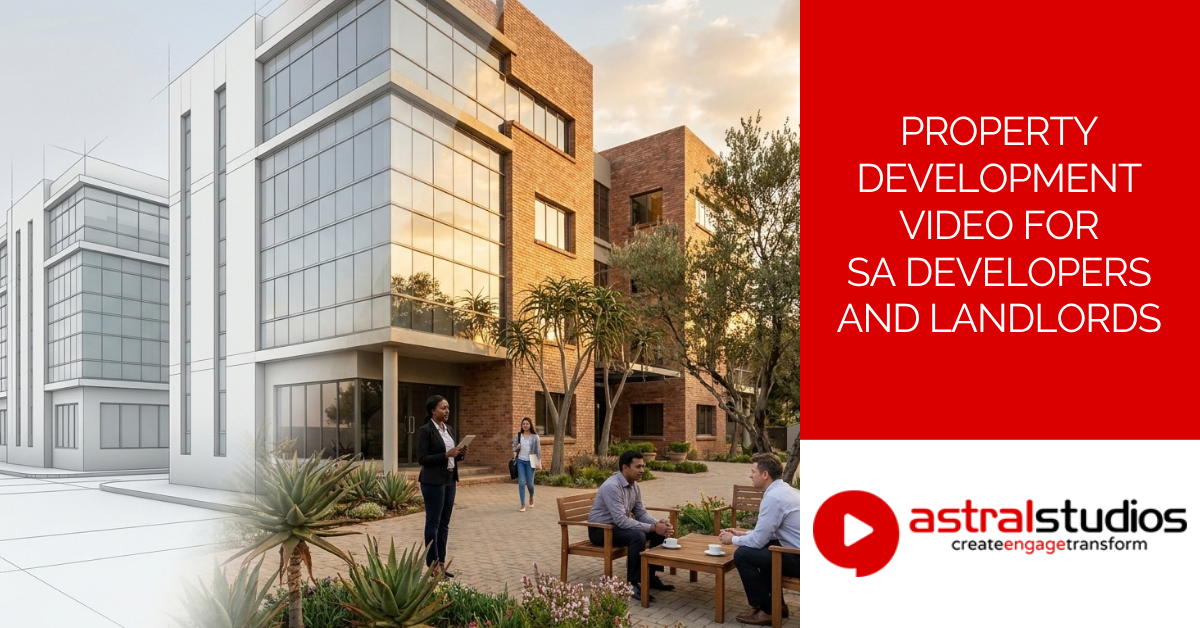
Property Development Video for SA Developers and Landlords
Property development video can sell a building before the first brick goes up. This guide shows what to film at each stage. It also covers formats, site rules and honest visuals.
Say a developer launches an off-plan block in Sandton. The sales suite looks great. The CGI film looks even better. Then the agents ask a fair question. “What do buyers see for the next 18 months?” Does this scenario sound familiar? In my opinion, most developers spend big on one launch video, then go quiet.
Good news first. You can plan one shoot schedule that matches the build. Each stage gives you fresh footage. Each clip does a different job.
What Is Property Development Video?
Property development video covers a whole project, not one unit. It follows a building from land to launch to leasing.
A listing video shows a place that exists. A development video often sells a place that does not exist yet. So you sell a plan, a location and trust.
Who watches it
Different viewers want different things.
- Buyers want to picture daily life.
- Tenants want access, parking, backup power and fibre.
- Funders want proof that the project moves.
- Agents want clips they can send on WhatsApp.
- Neighbours and councils want to see a sensible plan.
One shoot can feed all of them. You just cut it differently.
Property Development Video by Stage
A project needs different video at different points. Plan the whole run before the first shoot. The table gives a quick view.
| Stage | Video type | Main viewer | Typical length | Where it runs |
|---|---|---|---|---|
| Land and funding | Investor pitch with aerials and CGI | Funders, equity partners | 2 to 3 minutes | Meetings, email, data room |
| Off-plan launch | CGI film, 3D walkthrough, lifestyle story | Buyers, agents | 60 to 90 seconds | Website, social, agent decks |
| Construction | Progress update, time-lapse, drone pass | Buyers, funders | 30 to 60 seconds | Social, investor updates |
| Completion | Handover film, show unit tour | New owners, tenants | 60 to 90 seconds | Website, social |
| Leasing and sales | Space tour, tenant story, aerial context | Tenants, buyers | 30 to 90 seconds | Portals, LinkedIn, email |
Lengths are suggestions, not fixed rules.
Land and investor pitch
Funders watch many pitches. Keep yours short and clear. Open with an aerial of the site. Show roads, nearby nodes and transport links. Then cut to CGI of the finished scheme. End with the ask.
Off-plan launch video
Off-plan buyers pay for something they cannot touch. Your video does the touching for them. A CGI film shows finishes, layouts and views. A 3D walkthrough lets buyers move through at their own pace. Add a short lifestyle story to show who lives there.
Keep each clip to one idea. Label every render on screen. A later section explains why.
Construction progress video
This is the stage most developers skip. It also keeps buyers calm. Film from the same spot each month. A drone pass and a fixed time-lapse camera work well. Agents get fresh posts. Funders see the programme move. Buyers watch their future home rise.
Completion and handover video
Now real footage replaces renders. Show the finishes, the light and the views. Capture the day the first owner or tenant walks in. Match the result to the early CGI. That honest match builds trust.
Leasing and sales video
Offices, warehouses and retail centres each need a different tour. The next sections cover them all.
Live Action, CGI, 3D Walkthrough or Animation?
Each format does one job well. Pick by stage, not by habit.
Live action
Live action suits finished buildings, people and neighbourhood atmosphere. Real light and real faces sell trust.
CGI renders and film
CGI works best before construction. It shows finishes, layouts and views that do not exist yet.
3D walkthrough and virtual tour
Buyers move through the space at their own pace. A digital twin goes further. It copies the real building into a model you can walk through online. Both suit big estates and phased projects.
Animation and motion graphics
Use animation for phasing, site plans and infrastructure. It also explains unit mix and yield in plain pictures. Keep it short. Keep it clear.
Blend them
Open with a drone shot of the real site. Cut to CGI of the future scheme. Close with the neighbourhood and its people. The guide on live action versus animation helps you compare formats.
Commercial Property Video for Offices, Warehouses and Retail
Commercial space sells on facts. Tenants want numbers, access and proof that the building works. Video shows all three fast.
Office parks and office-to-residential conversions
Show what tenants use every day. Think parking, backup power, fibre, lifts and shared amenities. Film a normal workday with real tenants. For a conversion, tell a before-and-after story. Get consent from current occupants first.
Warehouses and industrial parks
Tenants check clear height, dock levellers, yard space and security. Show the truck route to the highway. In my view, an aerial of the access routes beats a fancy interior.
Retail centres
Film footfall, anchor tenants, parking and centre events. Shoot outside trading hours, or get consent from tenants and shoppers.
Mixed-use developments
Show how living, working and shopping connect. A day-in-the-life story works well across a precinct. Follow one resident and one tenant from morning to evening.
Cape Town offers a live example. The Paradigm in the CBD will hold 240 units. FNB announced R1 billion in funding in May 2026. Completion is set for the third quarter of 2026. A project that size has a long story to film. Land, build, launch and leasing each need their own video.
Visual Storytelling for Property Development Video
Pictures do the selling. Plan them like a story, not a brochure.
Build a simple story arc
Start with the problem. Maybe the area lacks good offices. Show the vision next. Prove it with site progress and real people. End with one clear invitation. That could be a viewing, an agent call or a lease pack request. One video, one idea.
Start wide, then go close
Open with an establishing shot. It shows the site in its setting. Then add B-roll of materials, craft and fine detail. Add people for scale. A tiny figure beside a tall facade tells buyers more than a number.
Shooting from public ground may need a permit. A separate guide on film permits in Johannesburg covers the rules.
Use real people with care
Residents, tenants and site teams add warmth. Get signed release forms from anyone recognisable. Many legal advisers say POPIA treats identifiable people on video as personal information. Ask a lawyer to check your wording. The Information Regulator publishes POPIA guidance.
Imagine a tenant at a Sandton office park. She says, “I walk to lunch and my fibre never drops.” This quote is invented. It shows how one real sentence beats ten adjectives.
Light, weather and time of day
Golden hour makes glass towers glow. Highveld afternoon storms can ruin a plan. Book a backup day. For progress shoots, repeat the same time of day. Matching light makes month-to-month cuts look smooth.
Sound, music and captions
Record clear audio on interviews. Keep the music light. Hire a local voice-over artist if the film needs one. Many viewers scroll with the sound off, so add captions.
Plan for every screen
Shoot a 16:9 hero film for the website. Plan 9:16 crops for Reels, Shorts and WhatsApp status. Add 1:1 for feeds. Frame wide shots with room to crop.
Keep Property Visuals Honest: A Cautionary Tale
The Advertising Regulatory Board (ARB) acted in late 2024. It ordered Aview Properties to pull a Cape Town ad. It promoted Monterey, a Bishopscourt development. The artist’s impression showed woodland and left out nearby homes. The ARB said the image gave a false sense of seclusion. Read the coverage on Bizcommunity and News24.
The developer argued that marketing uses stylised, aspirational imagery. It said buyers get legal documents and can visit the site. The ARB did not accept that. An appeal followed. At the time of writing, no appeal ruling is public.
Whatever the outcome, the case is a warning. In my view, regulators and buyers now look hard at renders. Video moves, so every frame gets judged.
A simple honesty checklist
- Show real neighbouring buildings, roads and trees at true scale.
- Label every render “artist’s impression” on screen.
- Match finishes, views and landscaping to the spec.
- Skip amenities that nobody has funded.
- Keep a file that shows the source for each render.
Why honesty helps sales too
Buyers who see the real site on handover day feel respected. Fewer surprises mean fewer complaints. Agents also field fewer awkward calls.
Drones, Site Access and Permissions
Drone rules
Paid drone work needs a Remote Pilot Licence for the pilot. The operating business needs a Remote Operating Certificate. The South African Civil Aviation Authority (SACAA) sets both. Flying over crowds needs extra permission.
Johannesburg’s 2025 CCTV by-law covered drones. The city later said it would repeal the by-law. Check the current status before you fly.
Hire a licensed team. A mate with a drone can cost you more in the end. Insurers may refuse a claim after an unlicensed flight.
Building sites
A live site has real risks. Book the site induction before shoot day. Bring your own PPE if the contractor asks. Get written permission from the principal contractor. Plan around concrete pours and crane lifts.
Film permits and permission
A private site with the owner’s permission usually needs no film permit. Public ground usually does. The Gauteng Film Commission explains who issues what.
POPIA and neighbours
Collect release forms for recognisable people. Tell neighbours when you fly near homes. A short letter drop avoids angry calls.
What to Prepare Before You Brief a Video Team
A clear brief saves days. Gather these items first.
- Project name, stage and target viewer.
- One line on what the viewer should do next.
- Site plans, unit mix, finishes schedule and approved render files.
- Programme dates, so shoots match build milestones.
- Site access contacts and induction rules.
- Brand guidelines and approved claims.
- One person who signs off the final cut.
Agree who handles what. The developer, contractor, agent and video team all play a part. Write it down before the shoot. A video production brief template helps.
How Much Does Property Development Video Cost?
Several things drive the price:
- CGI detail and the number of units shown
- Drone days and flight permissions
- Number of locations and crew days
- Rounds of revisions
- Number of cut-downs and formats
Plan a package across stages instead of one-off clips. Repeat visits can cut set-up time. Ask each supplier what the quote covers. Guides on drone video cost and animation cost add detail.
Measure and Reuse Your Property Development Video
What to track
Track enquiries per video. Count the site visits booked. Check watch time and drop-off points. Ask agents which clips they actually send. Note which video leads to a lease pack request.
Where each cut belongs
- Website hero: the full film.
- Agent decks and WhatsApp: the 30-second cut.
- LinkedIn: investor updates and tenant stories.
- Property portals: tours and aerials.
- Email signatures and on-site screens: short loops.
Guides on video SEO and justifying video spend to a CFO help too.
Common Mistakes in Property Development Video
- Waiting until completion to film.
- Using renders that hide neighbours or change finishes.
- Making one long video for every viewer.
- Skipping same-position repeats on progress shoots.
- Ignoring site induction or drone licences.
- Forgetting release forms.
- Skipping a plan for cut-downs.
Plan Your Property Video Before Launch Day
A good plan turns one shoot into months of content. Start with the stage you are in today.
Contact us for property development video production in Johannesburg from Astral Studios.
Glossary of Technical Terms
- Artist’s impression: A drawing or render that shows how a project may look when finished.
- ARB: The Advertising Regulatory Board, which rules on advertising complaints in South Africa.
- B-roll: Extra footage that covers the main story, such as details and people at work.
- CGI render: A computer-made image or film of a building that does not exist yet.
- Cut-down: A shorter version of a longer film, made for a specific platform.
- Digital twin: A virtual copy of a real building that you can move through online.
- Establishing shot: A wide opening shot that shows where the story takes place.
- Handover: The point where the developer gives finished units or space to owners or tenants.
- Mixed-use development: A project that combines homes, offices, shops or other uses on one site.
- Off-plan: Selling or leasing a unit before construction ends, using plans and renders.
- POPIA: The Protection of Personal Information Act, which governs personal data in South Africa.
- PPE: Personal protective equipment, such as hard hats and hi-vis vests.
- Remote Operating Certificate (ROC): A SACAA certificate that a business needs to run drones for paid work.
- Remote Pilot Licence (RPL): A SACAA licence that a drone pilot needs for paid work.
- SACAA: The South African Civil Aviation Authority.
- Show unit: A fully furnished sample unit that buyers or tenants can visit.
- Site induction: A safety briefing that visitors complete before entering a building site.
- Time-lapse: Footage shot over weeks or months and sped up to show change.
- Virtual tour: An online walkthrough that lets a viewer look around a space.
Frequently Asked Questions
What is a property development video?
A property development video is film that sells or reports on a whole project. It can cover land, plans, construction, handover and leasing. Developers use it for buyers, tenants, funders and agents.
What is the best video type for an off-plan development?
A CGI film plus a short lifestyle story works best at launch. Add a 3D walkthrough for buyers who want detail. Label every render as an artist’s impression.
How long should a property development video be?
Aim for 60 to 90 seconds for launches and handovers. Progress updates can run 30 to 60 seconds. Investor pitches can stretch to three minutes. These are suggestions, not fixed rules.
Do I need a licence to film a development with a drone?
Yes, for paid work. The pilot needs a Remote Pilot Licence. The operating business needs a Remote Operating Certificate. Both come from SACAA. Check local rules before you fly.
Can I use CGI renders in my marketing?
Yes, if they stay honest. Label each render as an artist’s impression. Show real neighbouring buildings and keep finishes true to the spec. The 2024 ARB ruling on a Cape Town development shows the risk.
How often should I film construction progress?
Monthly suits most projects. Large builds may need a pass every quarter. Film from the same spot at the same time of day. Add key milestones, such as the roof going on.
Do I need a film permit to shoot at my own development site?
Usually no, if you film on private land with the owner’s permission. Public ground, like streets and pavements, usually needs a permit. Ask the Gauteng Film Commission if you are unsure.
How do I use video to attract commercial tenants?
Show access, parking, power, connectivity and security. Add an aerial of the route to major roads. Include a short tenant story. Cut a 30-second version for LinkedIn and email.


