


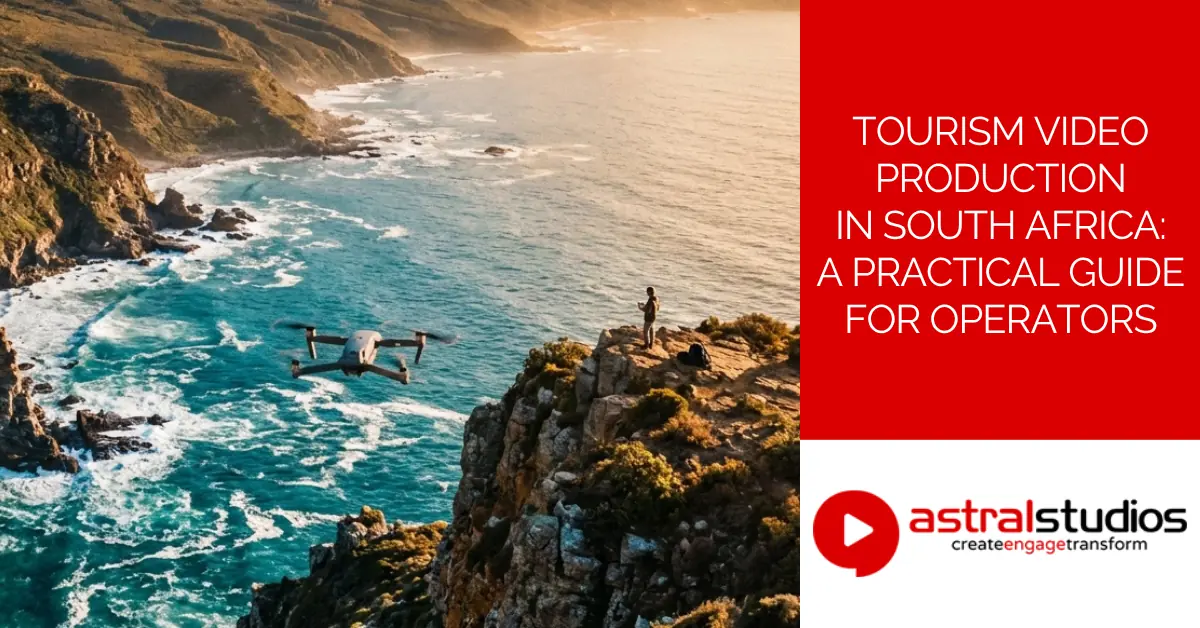
Tourism Video Production in South Africa: A Practical Guide for Operators
Travellers want to see a place before they pay for it. A good video does that job well. That is why tourism video production in South Africa matters. It helps lodges, tour operators and destinations stand out. Many businesses still don’t know where to start, though. This guide covers what to film, when to film, and what it costs.
What Tourism Video Production in South Africa Covers
Tourism video is more than pretty scenery. It sells an experience before the guest arrives. Most projects fall into one of these groups:
- Lodges and game reserves that want more direct bookings
- Tour operators who sell guided trips
- Tourism boards and municipalities that market a whole region
- Attractions, wine estates and activity providers
Hotels and guesthouses overlap with this list. For that side, read the post on marketing video for hospitality. Meanwhile, the marketing videos page shows the formats on offer.
Types of Tourism Videos That Work
Lodge and property films
A lodge film shows the rooms, the food, the staff and the view. Keep it short. Two to three minutes are plenty. Less shots, done well, beat a long reel. Also show guests doing things, not just empty rooms.
Destination films for regions and boards
A destination film sells a whole place, such as a town or route. These films need more shoot days and more voices. Local guides, farmers and chefs make them feel real. Some boards pick a documentary style for this reason.
Tell people stories, not just scenery
Local news backs this up. In September 2026, South African Tourism teamed up with Red Bull. Together, they launched a four-part series called What We Know. It aired on SABC 1 and SABC+. The series follows a road trip and focuses on people and communities. It aims to go beyond scenery and wildlife.
Your lodge can use the same idea. Film the guide who knows every bird call. Film the cook who runs the kitchen. Guest stories work well too. This post compares testimonial videos and case studies.
When to Schedule Tourism Video Production in South Africa
Season changes what you can film. Plan the shoot around your best story.
| Season (rough guide) | What you can film | Watch out for |
|---|---|---|
| Dry winter, about May to September | Game at waterholes, clear skies, misty mornings | Cold early drives, dry grass |
| Green summer, about November to March | Lush bush, birds, beaches, long daylight | Heat, afternoon storms, thick bush |
| Whale season, about June to November | Southern right whales along the Western Cape coast | Rough seas, weather delays |
| Spring bloom, about August to September | Wildflowers on the West Coast and in the Northern Cape | Short window, shifting weather |
Treat these windows as rough guides. Ask your local guides what the season looks like this year. Then book your crew early. Remote lodges sometimes run on generators or solar power. Load shedding rarely stops a shoot now, but crews still pack spare batteries.
Drone Footage and SACAA Rules
Aerial shots show scale and scenery well. However, they come with rules. The South African Civil Aviation Authority (SACAA) regulates drones. Paid drone work counts as commercial use. Commercial work usually needs three things:
- A Remote Pilot Licence (RPL) for the pilot
- An RPAS Operator’s Certificate (ROC) for the operation
- SACAA registration for each drone
Ask any producer for proof before you book. Ask about public liability insurance too. Some parks also restrict drones, so check before you plan aerial shots. For budgets, see the guide to corporate drone video costs.
Permits for Tourism Video Production in Parks and Reserves
Commercial filming in a national park needs a permit. SANParks runs its own application process. First, you send the application form. Next, the park reviews the impact of your shoot. Then you receive an invoice, and the permit follows after you pay.
Some parks give film dates for only two days per application. Provincial and private reserves set their own rules, too. Plan early, permits take time. The guide to film permits in Johannesburg shows how the process works in a city.
Guests have privacy rights as well. Get written consent before you film them. The post on filming consent under POPIA explains how.
Multilingual Tourism Videos for International Visitors
Your guests don’t all speak English. Subtitles and voice-over reach more markets. Start with the markets you already sell to. South African Tourism shares market news that can guide you.
Add closed captions as well. They help viewers who watch with the sound off. The post on closed captions and SASL covers this. To choose your languages, read how many languages your corporate video needs.
Many visitors also watch on a phone with a weak Internet connection. Keep files light, and test them on mobile. The guide to video SEO for a mobile-first audience helps here.
Event Coverage at Africa’s Travel Indaba
Africa’s Travel Indaba is a major trade show for the sector. South African Tourism owns it. Durban hosts it each May, and the city holds the rights until 2030. The 2027 show runs from 11 to 13 May at the Durban ICC. BONDay, a networking day for buyers, exhibitors and media, opens on 10 May. Exhibitors include game lodges, tour operators and accommodation providers. Check the official Indaba site for registration deadlines.
Video helps you stand out on a busy show floor. A short loop for your stand works well. Daily recap clips keep buyers talking after the show. The functions and events video page covers live coverage. For streaming, see the live streaming cost guide.
How Much Does Tourism Video Production Cost in South Africa?
Prices vary a lot, so treat these as broad ranges. Every brief is different. Remote travel, extra crew and long edits push costs up.
[Editor note: all figures below are estimates and need sign-off before publishing.]
| Project type | Broad price range |
|---|---|
| Short lodge or property promo (30 – 90 seconds) | R15,000 – R50,000 |
| Full lodge or attraction film (2 – 4 minutes) | R35,000 – R120,000 |
| Destination or tourism board film (3 – 5 minutes, multi-day) | R100,000 – R400,000+ |
| Drone add-on | R5,000 – R20,000 |
| Trade show coverage with daily edits | R25,000 – R100,000 |
| Extra language version (voice-over and subtitles) | R3,000 – R15,000 per language |
Several things move the price. Shoot days matter most. Travel to remote lodges adds cost. Talent, music licences and extra languages add more. For a wider view, see the guide to how much a video production costs. The corporate video cost guide also helps.
How to Brief a Tourism Video Producer
A clear brief saves money. Share these points:
- Who you want to reach, and where they live
- Your three best experiences
- The seasons you want to show
- Where the video will run, such as your website or a trade show
- Your budget range and deadline
Use the free video production brief template to write it down.
Ready to Show Travellers What You Offer?
Tourism video works best when the plan matches the place. Astral Studios is a Johannesburg video production company serving brands across South Africa. Clients can request a lodge film, a destination story or event coverage. The team will scope the project with you.
Tourism Video Production in South Africa: FAQs
How much does tourism video production cost in South Africa?
Broad estimates run from about R15,000 for a short lodge promo to R400,000 or more for a destination film. Your brief, travel and shoot days decide where you land.
How long does a tourism video take?
Most projects take around four to eight weeks from brief to delivery. Permits and remote travel can add time. The video production timeline guide breaks down each stage.
Do I need a permit to film in a national park?
Yes, commercial filming needs a permit from the park authority. SANParks has its own form and fee process. Apply early.
Can I fly a drone at my lodge?
Yes, but a licensed commercial operator must fly it. The pilot needs an RPL, the operation needs an ROC, and the drone needs registration. You also need the property owner’s permission.
Which languages should my tourism video include?
Start with English and the language of your top source market. Add subtitles first, because they cost less than a full voice-over.
Can one shoot give me more than one video?
Yes. Plan extra footage on the day. A crew can cut a main film and shorter clips from one trip. The same crew can also capture photography on the same visit.
Glossary
- B-roll: Extra footage that supports the main story, such as scenery and small details.
- Closed captions: On-screen text of speech and key sounds, for viewers who can’t hear or have the sound off.
- Destination film: A video that sells a whole town, region or route instead of one business.
- POPIA: The Protection of Personal Information Act, which governs how you use people’s images and data.
- RPAS: Remotely piloted aircraft system, the official term for a drone.
- RPL: Remote Pilot Licence, the licence a commercial drone pilot holds.
- ROC: RPAS Operator’s Certificate, the approval a commercial drone operation needs.
- SACAA: South African Civil Aviation Authority, the body that regulates drones.
- SANParks: South African National Parks, which issues filming permits for its parks.
- Subtitles: On-screen text that shows the spoken words, often in another language.
- Voice-over: Recorded narration added over footage.


